
A Purchase Order Delay Needs a Customer Update Plan Before the ETA Changes by the Hour
A purchase order delay customer update plan helps small businesses protect trust, reset expectations, and stop delayed inbound inventory from becoming chaotic outbound promises.
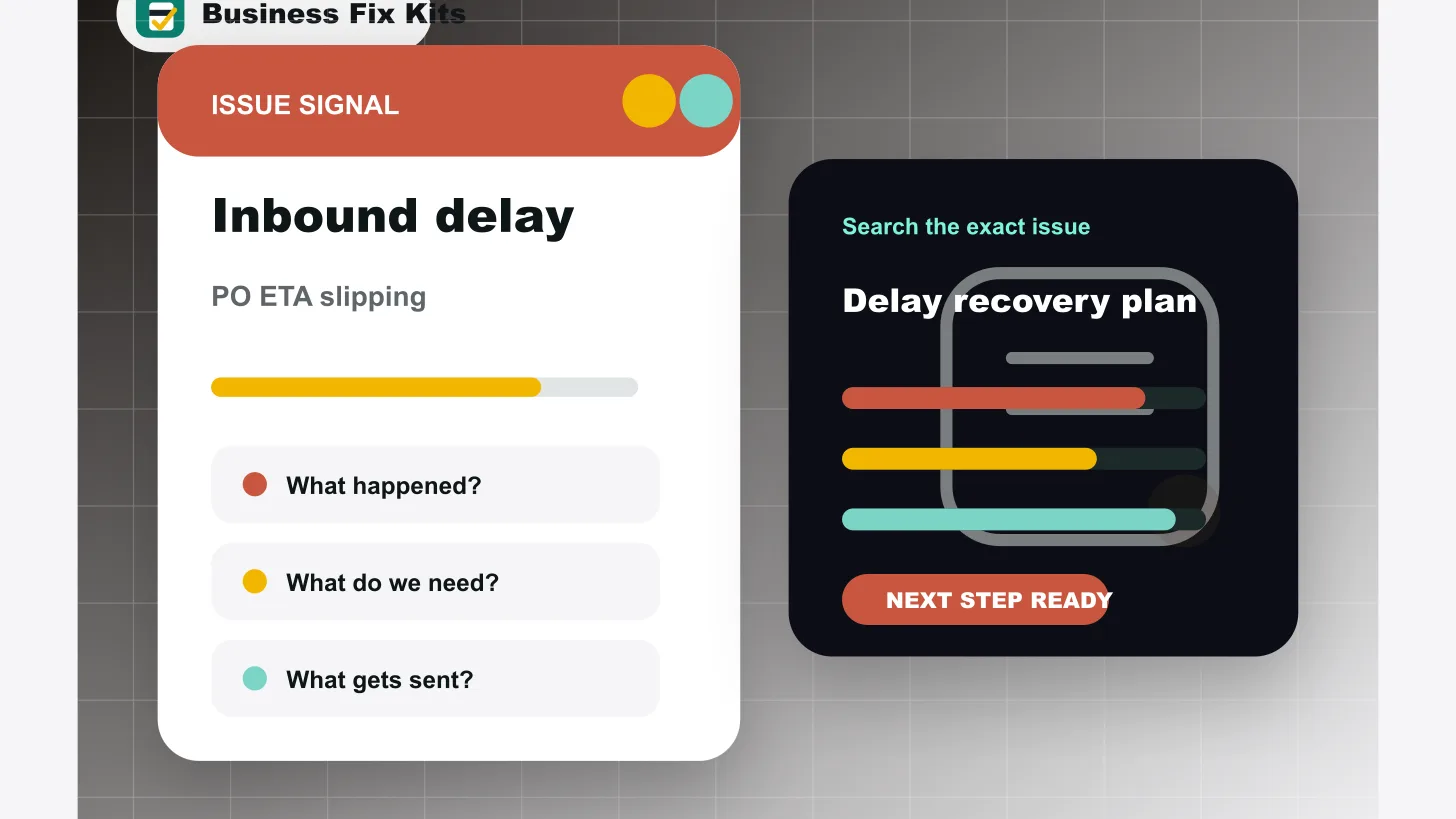
A purchase order delay becomes a trust problem fast because one supplier slip can force the business to change multiple customer promises before the team has one clear answer about what is really late.
A purchase order delay customer update should confirm the supplier's latest realistic ETA, identify every affected order, define the new promise window, and give customers a specific next update instead of a string of hourly guesses. Small businesses damage trust when the team keeps repeating vendor optimism that has not held up twice already.
The first mistake is forwarding raw supplier language directly to the customer. Vendors often speak in possibilities, not commitments. If the business repeats those guesses without a buffer, the customer experiences each revision as a broken promise, even when the supplier never clearly committed to the date.
The second mistake is treating every delayed order the same. Some customers need a same-day call because a jobsite is waiting on materials. Others only need a revised ship window and one clear update date. The plan should separate urgency, revenue risk, and relationship risk before any blanket email goes out.
Rules vary by state, so verify with your attorney if the delay affects deposits, liquidated damages, or regulated delivery promises. For everyday operators, though, the immediate fix is the same: stop improvising and control the update path.
What a purchase order delay update should answer
| Update question | What breaks without it | What you need first |
|---|---|---|
| What is actually delayed? | The team communicates too broadly or misses some affected orders. | SKU, material, or PO line detail. |
| Which customers feel it first? | High-risk accounts get the same treatment as low-risk delays. | An affected-order list by urgency. |
| What is the revised promise? | Customers hear a moving ETA every time they ask. | A realistic new window with buffer. |
| What options exist? | The business sounds stuck instead of proactive. | Substitute, partial-ship, rush, or cancellation choices. |
The four rules for delay communication
Why delay emails keep making things worse
The team forwards each vendor excuse as it arrives, customers hear three different dates, and support spends the week cleaning up promises nobody can defend.
The business checks the true impact, resets the promise window once, and gives customers one clear next update with a real option set.
Get the free Emergency Triage Sheet
The first three moves for any business emergency, plus one practical fix in your inbox each week.
No spam. Unsubscribe anytime.
A delay update you can copy
Our supplier has delayed part of your order, and the original ETA is no longer reliable. Based on the latest confirmed information, we now expect [item/order] in the window of [date range]. If that timing does not work, we can offer [substitute / partial fulfillment / revised schedule]. Our next update to you will be by [date/time].
Small business example
A contractor is waiting on custom storefront glass tied to four active jobs. The supplier first says the shipment is two days late, then maybe five, then says part of the order may release sooner. If the office tells each customer whatever was heard most recently, the company will spend the week defending moving dates. A better move is to group the four jobs by install urgency, set a customer-safe window of seven to nine extra days until the supplier proves otherwise, and call the highest-risk customer first with options for sequencing or partial work.
That one layer of discipline protects trust because the customer hears a controlled message instead of raw supplier volatility. It also helps the business decide where to spend recovery effort. The problem may not be one bad PO. It may be weak vendor follow-up, poor substitute planning, or no rule for how soon customers get updated after ETA drift begins.
Checklist before the next delay reaches the customer
- Confirm which PO lines are truly delayed before sending a wide message.
- Rank customers by revenue, operational urgency, and relationship sensitivity.
- Use a revised window with buffer instead of repeating every supplier maybe.
- Offer the best available option, even if it is only a partial shipment or resequenced work.
- Commit to one next update time and keep it.
FAQ: should you tell customers the exact supplier problem?
Usually only to the extent that it helps explain the revised timing and options. Customers care more about what changed, how it affects their order, and what happens next than they care about a long vendor backstory.
The stronger message is concise and controllable. Explain the impact, reset the promise, and show the next step without making the customer decode your supplier relationship.
Free version vs. full kit
This article gives you the free lightweight version: confirm the delayed lines, rank affected customers, and send one controlled update with the next update date. The full Purchase Order Delay + Reorder Prioritization Kit gives you an affected-order tracker, vendor follow-up log, customer update templates, and reorder decision sheet for teams that need delay handling to stop living in scattered inbox threads.
View the Purchase Order Delay + Reorder Prioritization Kit
Fix the next one before it starts.
Join the list for the free Emergency Triage Sheet and a new practical fix every week.
No spam. Unsubscribe anytime.