
An Inventory Stockout Needs a Recovery Plan Before One Missing SKU Turns Into Refunds and Fire Drills
An inventory stockout recovery plan helps small businesses protect margin, prioritize reorders, and communicate clearly before a shortage becomes a customer-service mess.
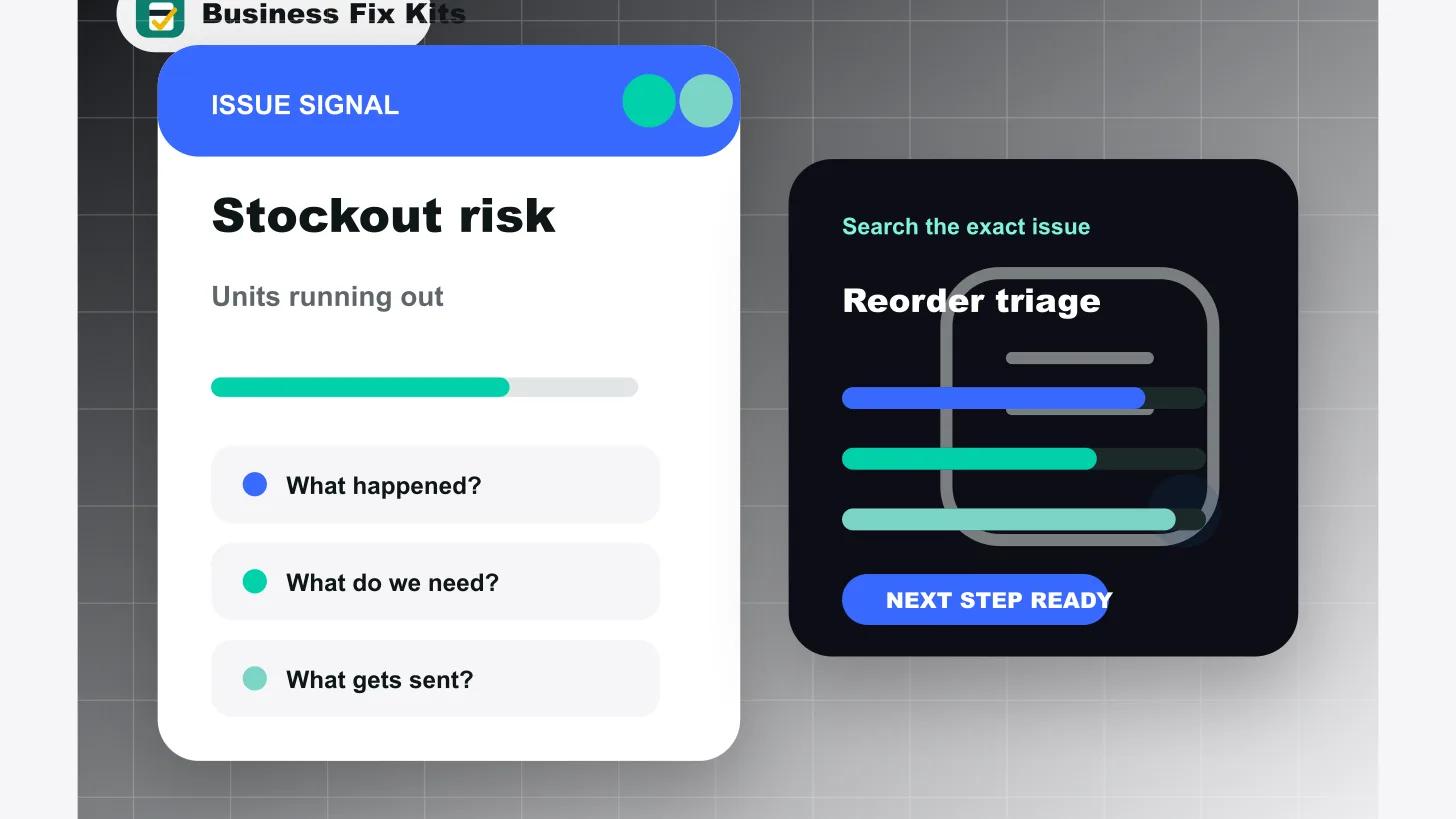
An inventory stockout is not only a purchasing problem because it also changes promises, reorder timing, support volume, and what the business can ship next.
An inventory stockout response should confirm the real available quantity, stop inaccurate promise dates, rank affected orders by urgency, and open a clean reorder and customer-update workflow before the shortage spreads into refunds and internal guesswork. Small businesses lose the most money when every team member handles the shortage differently.
Stockouts create two problems at once. One problem is operational: you need replacement supply. The other is customer-facing: people already bought, quoted, or expected the item. If those two tracks are not managed in one place, the business starts overpromising while the purchasing team is still hunting for answers.
Another common mistake is treating every affected order the same. A reorder plan is stronger when it separates urgent customer commitments, best-margin orders, and orders that can be swapped, delayed, or partially shipped.
Rules vary by state, so verify with your attorney or accountant if the shortage affects regulated goods, customer deposits, or contract penalties tied to missed delivery dates. That is less about routine stockouts and more about the edge cases that create legal exposure on top of an inventory problem.
What an inventory stockout usually impacts first
| Impact area | What starts breaking | What you need first |
|---|---|---|
| Open orders | Ship dates and customer expectations become uncertain. | A list of every affected order and promised date. |
| Reorder timing | Buyers may not know the fastest realistic replenishment path. | Vendor lead time, MOQ, and alternate-source options. |
| Margin | Rush freight, split shipments, or substitutions can erode profit. | Unit economics before emergency decisions. |
| Support load | Customers ask for updates through multiple channels. | One approved message and one owner. |
The four-part stockout recovery file
Why stockouts spiral in small teams
Sales keeps taking orders, support promises shipping soon, and purchasing is still waiting to hear back from the vendor.
The business freezes new promises, ranks affected orders, and communicates from one shared view of quantity and lead time.
Get the free Emergency Triage Sheet
The first three moves for any business emergency, plus one practical fix in your inbox each week.
No spam. Unsubscribe anytime.
An out-of-stock customer update you can copy
We are currently out of stock on [item], and the original ship timing for your order is no longer accurate. We are confirming the fastest replenishment path now. Your next update from us will be by [date/time]. If the revised timing does not work, we can offer [swap option / partial shipment / cancellation].
Small business example
An online parts seller shows 38 units available on a fast-moving SKU, but 24 of those units are already tied to marketplace orders that have not exported cleanly into the main system. The owner almost approves a rush reorder at a much higher landed cost. A better move is to reconcile true reserved stock first, separate priority wholesale orders from lower-margin marketplace orders, and then compare a partial fulfillment plan against the rush freight cost before spending an extra $1,900 to fix the shortage.
That same file should also answer two simple operating questions: which orders get protected first, and what promise can the team stand behind for everyone else? When support, sales, and purchasing all use different answers, the shortage lasts longer because customers keep reopening the problem. A lightweight stockout sheet can be enough if it shows quantity available, the next inbound date, the owners of each delayed order, and the message already sent.
Checklist before the stockout gets louder
- Reconcile actual on-hand inventory against open reservations before promising anything new.
- Pause or edit product-page availability if the current ETA is not defensible.
- Rank affected orders by promise date, revenue, and customer relationship value.
- Price the rush-reorder option against the refund or delay cost before acting.
- Use one approved customer message with a specific next-update date.
FAQ: should you keep selling an item during a stockout?
Only if the new lead time is real and clearly disclosed. If the team is still guessing about replenishment, continuing to sell the item usually creates more support load and more refund risk than it creates revenue.
The safer rule is to reopen sales only after the business can explain the new ship window, the available quantity, and the fallback option if the inbound supply slips again. That keeps the next wave of orders from inheriting the same confusion as the first.
Free version vs. full kit
This article gives you the free lightweight version: reconcile inventory, rank affected orders, and communicate from one promise path. The full Inventory Stockout + Reorder Recovery Kit gives you a stockout triage tracker, reorder decision matrix, customer-update scripts, and a recovery dashboard for shortages that affect multiple orders at once. It is built for the moment when the business needs one working operating view instead of five side conversations.
View the Inventory Stockout + Reorder Recovery Kit
Fix the next one before it starts.
Join the list for the free Emergency Triage Sheet and a new practical fix every week.
No spam. Unsubscribe anytime.