
An FMCSA New Entrant Safety Audit Needs a Document Plan Before the Carrier Starts Guessing What DOT Wants
An FMCSA new entrant safety audit response plan helps small carriers gather records, assign owners, and prepare a cleaner audit file before the audit date hits.
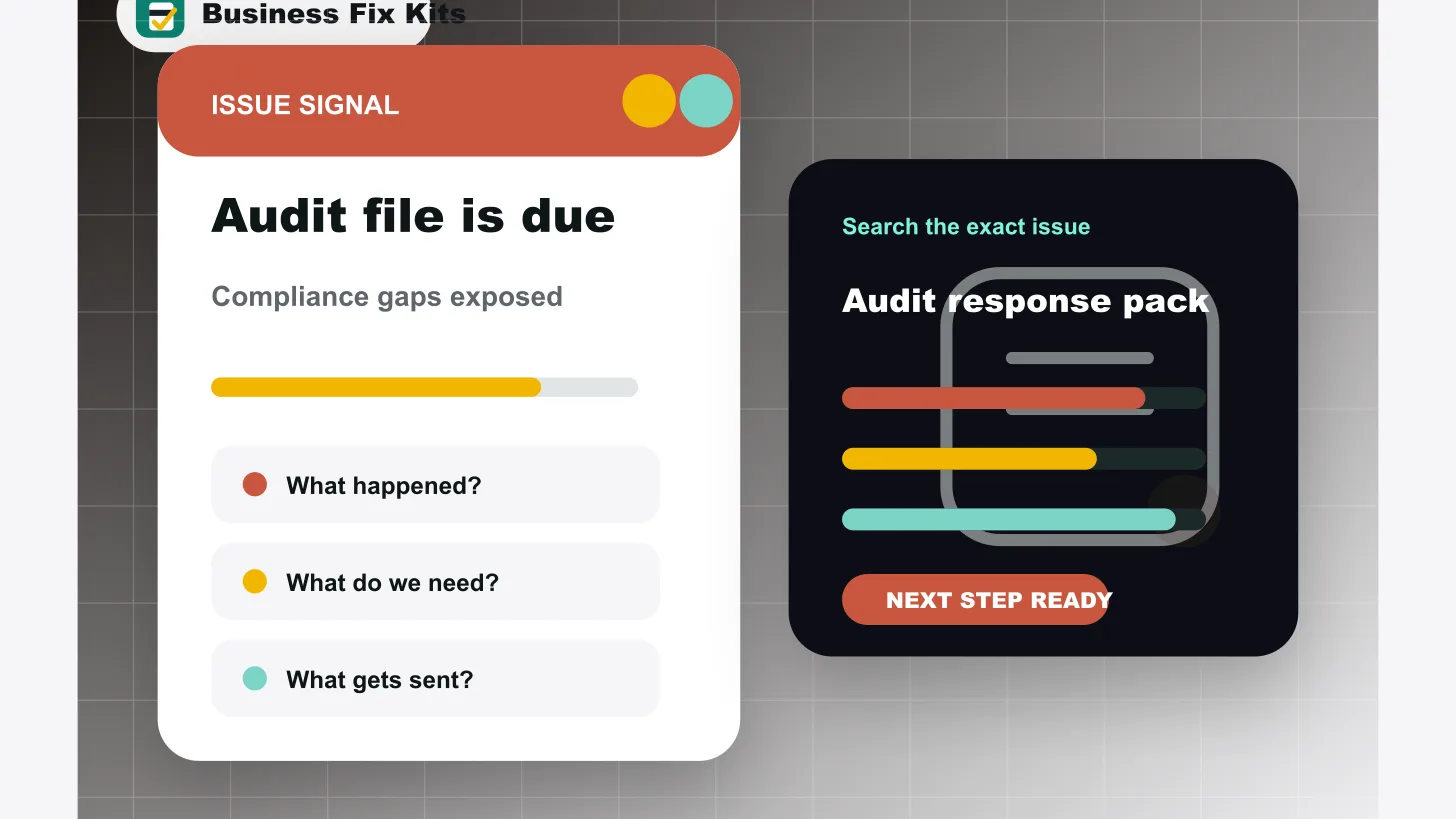
An FMCSA new entrant safety audit is easier to survive when the carrier builds one document file because the real risk is not only what is missing but also what the team cannot produce consistently on audit day.
An FMCSA new entrant safety audit response should identify the exact records requested, gather them in one file, assign an owner to each category, and close any obvious documentation gaps before the audit date. Small carriers usually struggle less because of bad intent than because their records are scattered.
The audit is stressful because it touches many systems at once: driver qualification, hours of service, maintenance, insurance, and controlled substance testing. A useful response process turns those categories into a checklist with named owners and proof for each item.
Rules vary by state, and federal carrier requirements can still turn on the details, so verify with your attorney or compliance advisor before relying on a quick guess. That is especially important if the audit notice exposes gaps you are not sure how to explain or correct.
What the new entrant safety audit usually focuses on
| Audit area | What the auditor is checking | What you need first |
|---|---|---|
| Driver qualification | Whether driver files contain required forms and checks. | DQ files, MVR records, and medical certificates. |
| Hours of service | Whether logs and supporting records align. | ELD data, logs, and dispatch support. |
| Vehicle maintenance | Whether inspections and repairs are documented. | Maintenance logs and inspection files. |
| Drug and alcohol program | Whether enrollment, testing, and policies are current. | Consortium records and policy acknowledgments. |
The four files every small carrier should build
Why small carriers fail easy audits
Ask dispatch for logs, text maintenance for inspection sheets, and hope someone can find the testing paperwork in time.
Assign each record set to one owner, check completeness before the audit, and track every missing item until it is closed.
Get the free Emergency Triage Sheet
The first three moves for any business emergency, plus one practical fix in your inbox each week.
No spam. Unsubscribe anytime.
An audit-response note you can copy
We received the new entrant safety audit notice dated [date] and have assembled the requested records by category. The attached folders include driver qualification, hours-of-service, maintenance, insurance, and program documentation. If there are any additional records you want prepared in advance of the audit, please let us know.
Small business example
A two-truck carrier has an audit scheduled in twelve days. The owner knows the safety binder exists but has not checked whether both drivers' medical cards, annual evaluations, and maintenance files are current. Instead of waiting for the audit call, the team creates five record folders, finds that one annual MVR is missing and one inspection record was saved only as a text photo, and fixes those gaps before the audit date rather than during it.
One practical habit is to label every file exactly the way an auditor would expect to find it. A DQ folder, HOS folder, maintenance folder, insurance folder, and testing folder can be simple, but they stop people from hunting through phones and inboxes while the audit is live. For small carriers, that organization often matters almost as much as the document itself.
Checklist before the FMCSA audit date
- Match the notice request list to actual files, not assumptions about what should exist.
- Check expiration dates, signatures, and legibility on each required record.
- Keep one gap log so missing items do not disappear into side conversations.
- Assign one person to answer each audit topic during the audit.
- Verify uncertain compliance questions with a qualified advisor before the audit.
FAQ: should you send every safety record before the auditor asks?
Usually no. It is better to prepare a clean file of what the notice requests and be ready for reasonable follow-up rather than flood the auditor with disorganized extras that create more questions than answers.
What matters more is speed and consistency once the request arrives. If the carrier can pull the exact file, explain who owns it, and show how it is kept current, the audit feels more controlled from the first exchange.
That same discipline also helps after the audit because any follow-up request can be answered from the same folder structure instead of rebuilt from scratch.
For tiny fleets, that repeatable structure is often the difference between a tense audit day and a manageable one.
Free version vs. full kit
This article gives you the free lightweight version: build the file, find the gaps, and assign response owners. The full FMCSA New Entrant Safety Audit Response Kit gives you a record checklist, gap tracker, owner map, and prep workflow designed for small carriers that cannot afford scattered audit prep.
View the FMCSA New Entrant Safety Audit Response Kit
Fix the next one before it starts.
Join the list for the free Emergency Triage Sheet and a new practical fix every week.
No spam. Unsubscribe anytime.