
A Commercial Vehicle Accident Needs an Incident Workflow Before Insurance, Ops, and Drivers Start Guessing
A commercial vehicle accident response workflow helps small businesses capture facts, protect insurance reporting, and coordinate operations after a crash.
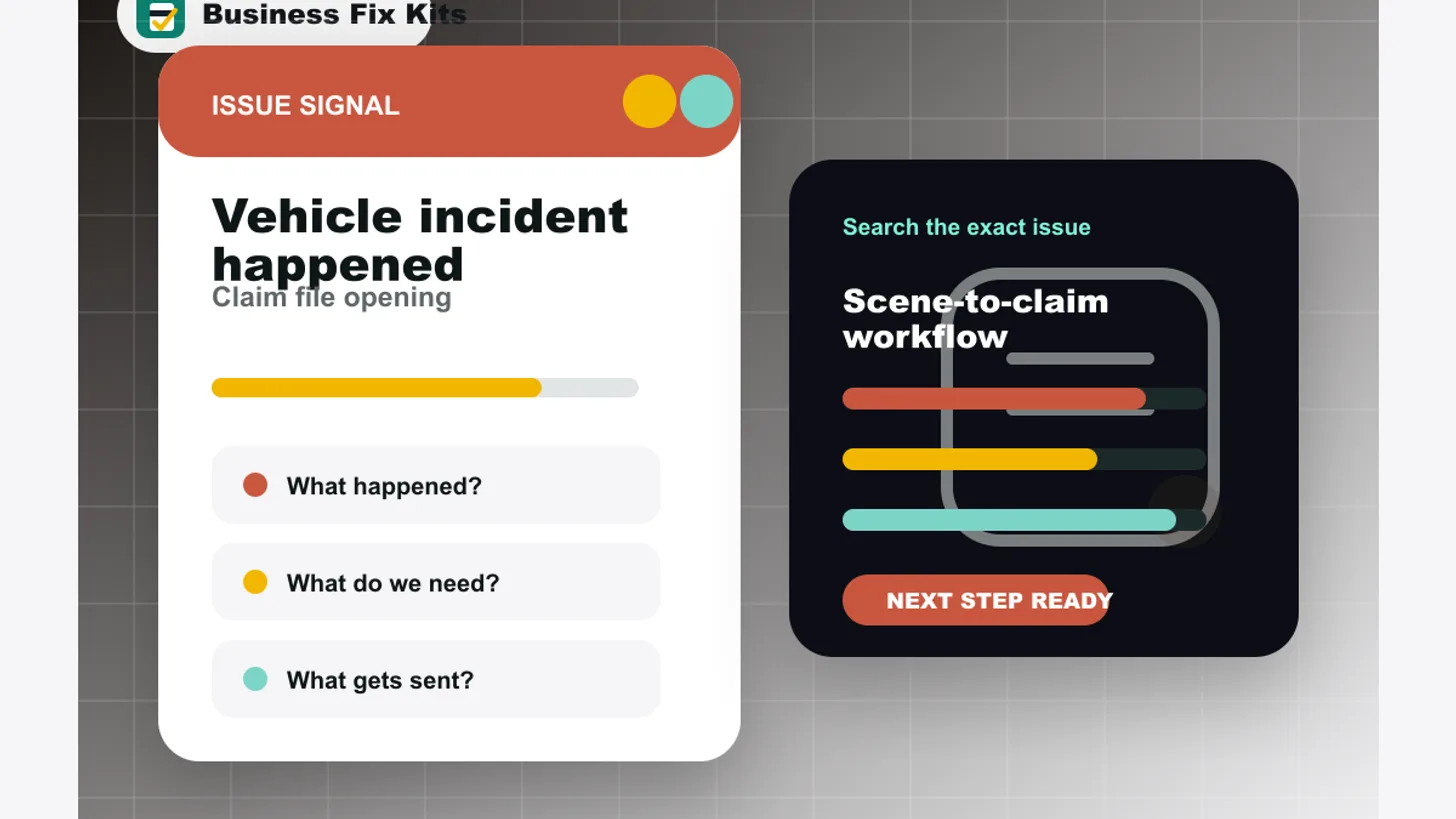
After the crash, the business needs one version of the facts.
A commercial vehicle accident response should secure the scene, collect the core facts, notify the right insurance and internal contacts, and log what changes operationally before memory starts to drift. Small businesses make this harder when the driver, dispatcher, and owner each keep separate notes and no one owns the incident file.
The real business value is not only in reporting the accident. It is in preserving one clean record that supports insurance, employee coaching, customer communication, and any temporary route or crew changes that follow.
What the incident file should capture
| Incident detail | Why it matters | Examples |
|---|---|---|
| Scene facts | Facts go fuzzy fast after the first hour. | Date, time, location, weather, vehicle, driver. |
| Third-party details | Insurance follow-up depends on usable contact data. | Other driver, witnesses, police, tow contact. |
| Photo evidence | Protects the claim and repair process. | Damage, roadway, positions, plates, surroundings. |
| Operational impact | Accidents often break the schedule too. | Missed jobs, route changes, replacement vehicle needs. |
The four-part accident workflow
What weak accident handling sounds like
The driver texts a few photos, the office makes phone calls from memory, and the story changes across three people.
One file captures the facts, the insurer gets one summary, and operations decisions are tracked alongside the claim.
Get the free Emergency Triage Sheet
The first three moves for any business emergency, plus one practical fix in your inbox each week.
No spam. Unsubscribe anytime.
A dispatcher or manager handoff script
We have a vehicle incident involving [driver/vehicle] at [location] on [date/time]. Please use one incident file for scene facts, photos, third-party contacts, police information, insurance notice, and operational changes. Do not rely on separate text threads as the official record.
Small business example
A field service company has a van involved in a minor collision on the way to two customer appointments. The driver sends a few rushed pictures and the owner starts calling the insurer while dispatch reschedules the afternoon on the fly. A better workflow creates one incident file first, logs the scene facts and photos, routes the insurance notice from that same file, and separately records how the schedule was reworked because of the accident.
Checklist for the first hour after the crash
- Capture location, time, vehicle, and driver details immediately.
- Collect names, phone numbers, and insurance details from third parties when appropriate.
- Take photos wide and close before vehicles move if safe and lawful.
- Notify the insurer and the internal operations owner from one summary.
- Track job, route, or crew changes caused by the accident in the same file.
FAQ: should you separate insurance notes from operations notes?
They can live in different sections, but they should still sit inside one shared incident record. Otherwise the claim file and the business-impact file drift apart, and the team wastes time reconciling them later.
Free version vs. full kit
This article gives you the free version: secure the facts, centralize reporting, and track the operational fallout. The full Commercial Fleet Accident Driver Incident Kit adds scene checklists, office handoff prompts, insurer-notice structure, and follow-up logs for repair and claim management.
View the Commercial Fleet Accident Driver Incident Kit
Fix the next one before it starts.
Join the list for the free Emergency Triage Sheet and a new practical fix every week.
No spam. Unsubscribe anytime.