
An Employee Schedule Swap Policy Stops Coverage Problems From Turning Into Group-Chat Chaos
An employee schedule swap policy helps small businesses approve shift changes fairly, protect coverage, and keep manager visibility when employees trade hours.
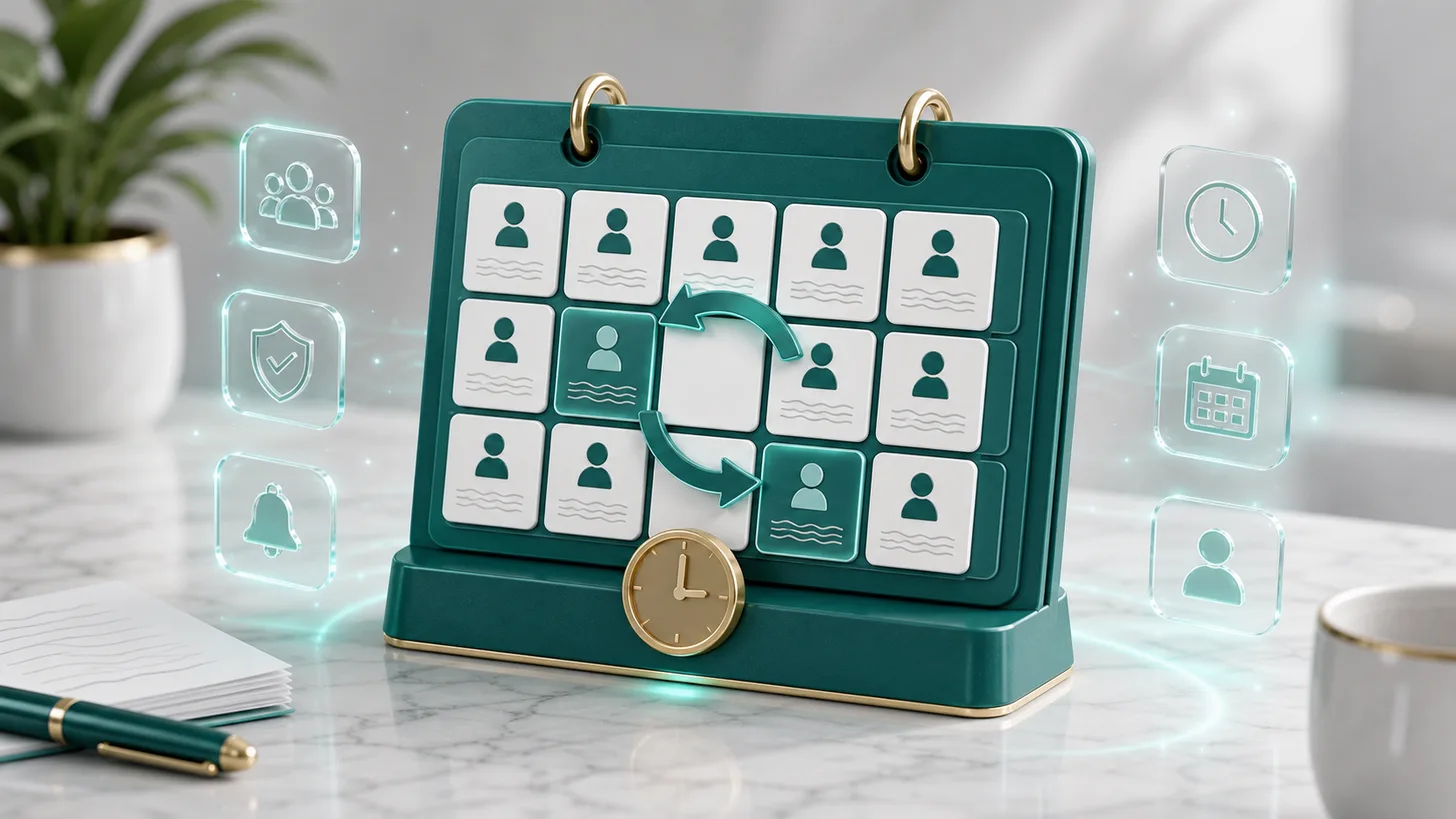
An employee schedule swap policy matters because shift trades feel harmless until a busy week reveals that nobody approved the change, payroll is wrong, and the manager discovers the coverage gap after the shift already started.
An employee schedule swap policy should define who can trade shifts, when approval is required, what information must be submitted, and when the schedule is considered officially changed. Small businesses create avoidable coverage and payroll mistakes when employees manage swaps informally in texts that never reach the real schedule.
The first mistake is saying swaps are allowed without defining the approval point. Employees assume the trade is done once someone agrees in a group chat, but the manager may not know whether the replacement is qualified, already close to overtime, or even visible on the final schedule.
The second mistake is overcorrecting with a policy so rigid that employees stop raising real conflicts early. A useful swap policy should support flexibility while keeping the business informed. The point is not to ban swaps. It is to keep them controlled.
Rules vary by state, so verify with your attorney if predictive scheduling, overtime rules, meal breaks, or minor-labor restrictions apply. Operationally, though, the day-to-day issue is simpler: if the manager cannot see the final owner of the shift, the policy is too loose.
What a shift-swap policy should make clear
| Policy element | What breaks without it | What you need first |
|---|---|---|
| Approval point | Employees think an informal agreement changed the schedule. | A clear manager approval rule. |
| Qualified replacement | The swap leaves the shift under-skilled or unsupported. | Role and duty requirements for that shift. |
| Payroll impact | Overtime or missed punches show up after the fact. | Visibility into hours, role limits, and labor rules. |
| Schedule update | The published schedule no longer matches reality. | One official place where the change is recorded. |
The four rules for cleaner schedule swaps
Why group-chat swaps create avoidable drama
Employees work out a trade in messages, the manager misses the thread, and the shift still looks assigned to the wrong person when payroll or attendance issues show up.
The team can still help each other, but every trade runs through the same approval and schedule-update process before it becomes official.
Get the free Emergency Triage Sheet
The first three moves for any business emergency, plus one practical fix in your inbox each week.
No spam. Unsubscribe anytime.
A shift-swap policy line you can copy
Employees may request schedule swaps by identifying the original shift, the employee covering it, and any role-specific duties involved. A swap is not approved until management confirms the replacement, checks the labor impact, and updates the official schedule.
Small business example
A restaurant allows staff to trade shifts freely as long as someone covers the slot. Over time, managers lose track of who actually owns Friday nights, overtime spikes unexpectedly, and newer staff get scheduled into roles they are not trained to run. Once the team adopts a simple swap form and approval rule, the flexibility stays, but the manager regains visibility before the shift starts instead of after a no-show or payroll issue.
That visibility also improves fairness. Managers can see who is frequently giving away shifts, who is hoarding overtime, and where the underlying scheduling problem may be poor availability matching rather than employee attitude. Over a month, the log also shows whether the real problem is weak staffing depth, unreliable availability collection, or one role that is too dependent on a single dependable closer.
Checklist before you call shift swaps controlled
- Define when a swap becomes official and who approves it.
- Check whether the replacement is qualified for the shift duties.
- Check hours and overtime impact before approval.
- Update one official schedule that everyone can trust.
- Keep a record of frequent swaps to spot coverage-pattern issues.
FAQ: should employees be allowed to find their own replacement?
Often yes, if the business still controls approval. Letting employees help solve coverage problems can be useful, but the manager should still confirm qualifications, hour limits, and the final schedule update.
The stronger policy is flexible but visible. Employees can help arrange coverage, but the business still decides when the swap is official. That balance usually keeps morale higher because the team sees the rule as a fairness system, not a manager mood that changes from week to week.
Free version vs. full kit
This article gives you the free lightweight version: require approval, confirm the replacement, and update the real schedule before the swap is final. The full Same-Day Callout Shift Coverage Kit gives you escalation steps, staffing texts, coverage tracker logic, and manager scripts for the moments when scheduling changes become urgent instead of optional. It is the stronger next step when shift trades are only one symptom of a bigger coverage problem.
View the Same-Day Callout Shift Coverage Kit
Fix the next one before it starts.
Join the list for the free Emergency Triage Sheet and a new practical fix every week.
No spam. Unsubscribe anytime.