
An Open Shift Text Needs a Coverage Ladder Before the Same Few Employees Carry Every Emergency
An open shift coverage ladder helps small businesses fill urgent schedule gaps without burning out the same dependable employees every time.
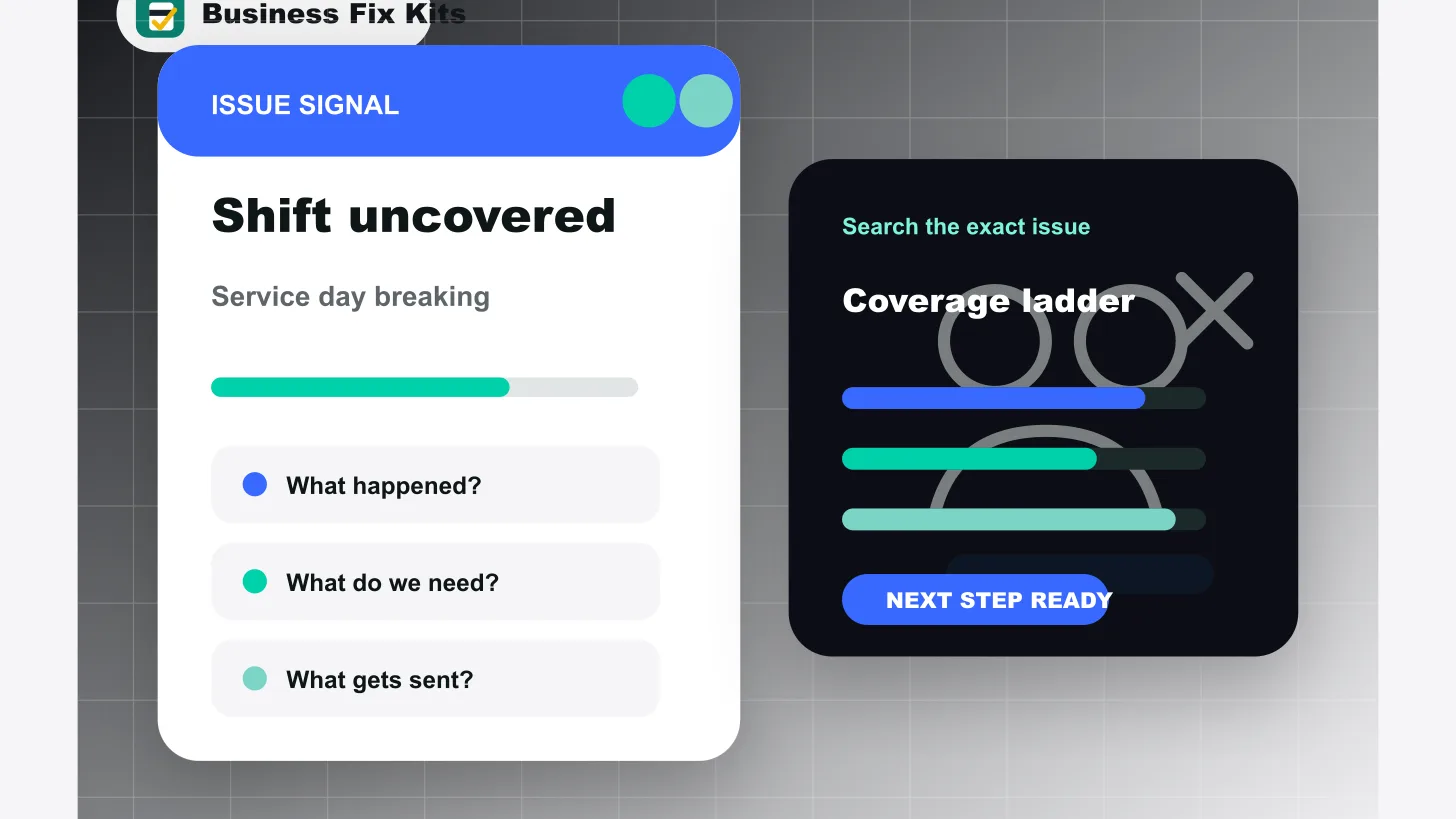
An open shift becomes a people-and-speed problem immediately because the manager has to protect service, fill the right role fast, and avoid training the team to expect that the same reliable employee will always bail everyone out.
An open shift text template works best when it sits inside a coverage ladder that ranks who can fill the role, who has already carried extra load recently, and how long the manager should wait before moving to the next option. Small businesses create burnout when every urgent gap turns into the same group text and the same few heroes.
Most managers know they need speed. Fewer think about the pattern they are reinforcing. If the team learns that emergency coverage always goes to the same dependable person, that person eventually feels punished for being reliable while everyone else learns they can stay passive.
The stronger system separates urgent coverage from fair coverage. First identify the role that must be covered and the minimum skill required. Then work through a contact ladder that starts with the best-fit options and records who has already taken extra shifts recently.
Rules vary by state and employer policy, so verify with your attorney or HR advisor if overtime, predictive scheduling, split-shift pay, or union terms affect how you assign emergency coverage.
What an open shift decision should answer first
| Coverage question | What goes wrong if it is unclear | What you need first |
|---|---|---|
| How critical is the role? | The team fills a lower-risk spot while the true bottleneck stays open. | The service-critical tasks for that shift. |
| Who is qualified? | A willing employee accepts a shift they cannot run well. | A simple skill or role backup list. |
| Who has carried extra load lately? | The same reliable people get overloaded and resentful. | A recent extra-shift log. |
| When do you escalate? | The manager loses an hour waiting on people with low odds of saying yes. | A clear contact order and time window. |
The four-part open shift ladder
Why open shift group texts stop working
Text everyone at once, wait in silence, then call the same dependable closer because nobody knows the priority or the deadline.
Work through qualified backups in order, use one concise message, and record who is taking the extra load so the pattern stays visible.
Get the free Emergency Triage Sheet
The first three moves for any business emergency, plus one practical fix in your inbox each week.
No spam. Unsubscribe anytime.
An open shift text you can copy
Open shift for [day] [time range] in [role]. Reply by [time] if you can cover it. Priority goes to teammates already cleared for this role, and I will confirm coverage in order as responses come in. If you can take only part of the shift, include the hours you can cover.
Small business example
A coffee shop loses a morning opener at 5:40 a.m. The manager's old habit is to text the whole team, wait ten minutes, and then call the same barista who already covered two emergencies this pay period. A better move is to check the opener backup list, text the first two qualified employees with a reply deadline, and log who has already taken extra shifts so the third emergency this month does not land on the same person by default.
That log also helps with staffing decisions later. If one location keeps leaning on the same few employees for coverage, the problem may not be bad luck. It may signal weak cross-training, an unreliable hire, or a schedule pattern that creates repeat callouts. The open shift ladder is useful because it solves today's gap and exposes next month's staffing risk at the same time.
Checklist before the next callout hits
- Define the service-critical roles that need a faster coverage path than everyone else.
- Keep a current list of who is qualified for each role or station.
- Track recent emergency coverage so fairness is visible instead of assumed.
- Set a reply deadline before moving to the next contact tier.
- Save the final coverage result so repeated weak spots show up in the record.
FAQ: should you always text the whole team first?
Usually no. A full-team blast feels fast, but it often creates confusion and trains people to wait for someone else to step in. A better first move is to contact the best-fit backups in order and escalate only when the role still is not covered.
That keeps the process faster for the manager and fairer for the team. It also produces a better record of how coverage actually happens, which helps the business fix the pattern instead of reliving it.
Free version vs. full kit
This article gives you the free lightweight version: log the gap, text in order, and track who is carrying extra emergency coverage. The full Same-Day Callout Shift Coverage Kit gives you a coverage ladder, role backup matrix, manager message templates, and follow-up tracker for the mornings when staffing problems hit before coffee does. It is built for operators who need speed without turning reliability into punishment.
View the Same-Day Callout Shift Coverage Kit
Related article: A Same-Day Callout Needs a Shift Coverage Plan Before the Text Thread Starts.
Fix the next one before it starts.
Join the list for the free Emergency Triage Sheet and a new practical fix every week.
No spam. Unsubscribe anytime.