
A CAM Reconciliation Dispute Needs a Charge Review Before the Lease Bill Gets Paid on Guesswork
A CAM reconciliation dispute plan helps small businesses check common-area charges, spot unsupported items, and answer landlords from records instead of confusion.
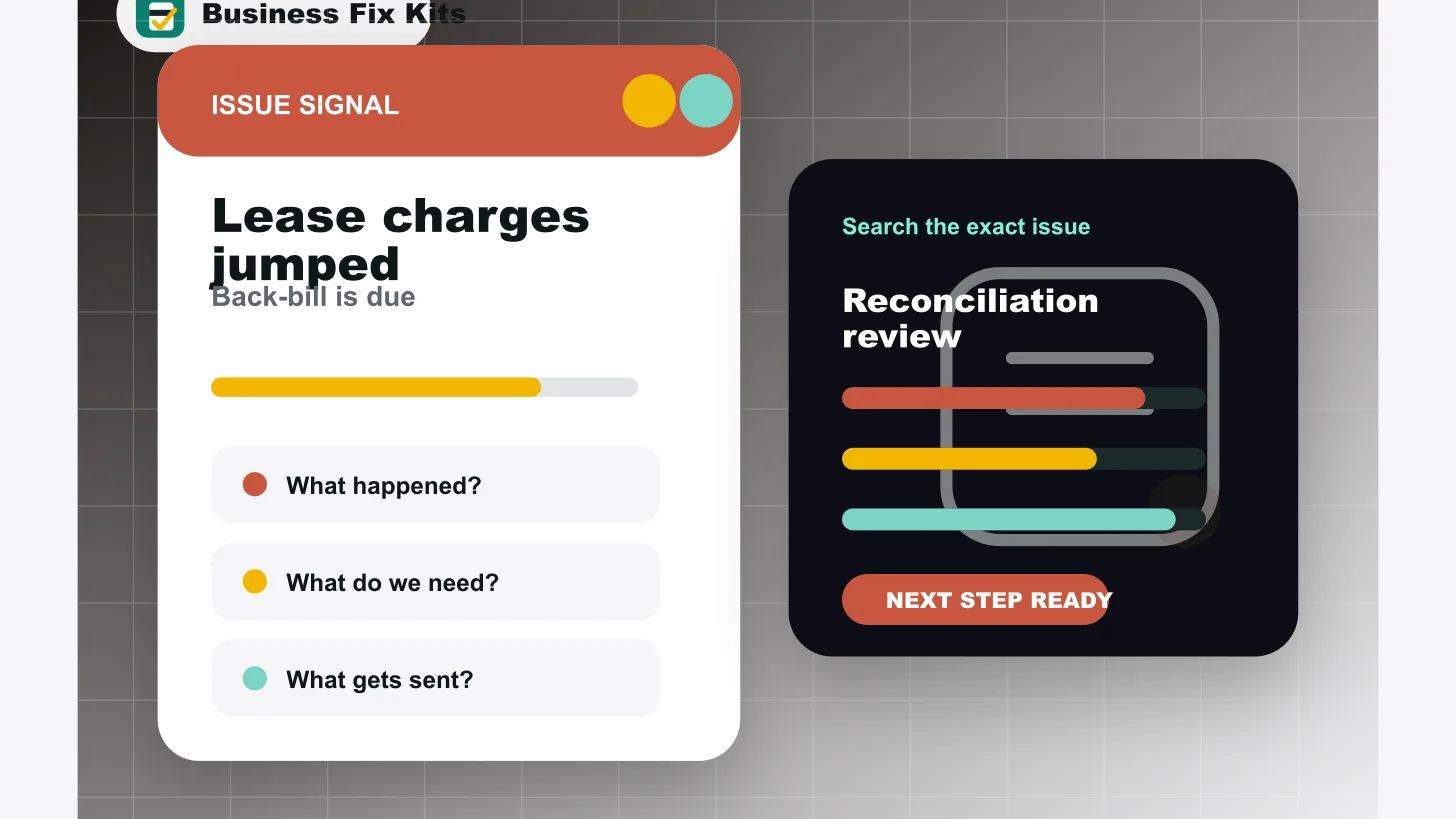
A CAM reconciliation dispute is easiest to manage when the tenant turns the statement into a line-item check because the risk is paying unsupported charges simply to end the confusion.
A CAM reconciliation dispute response should compare the reconciliation statement against the lease language, separate obvious charges from questionable ones, and send a documented request for backup before the tenant pays from confusion or ignores the bill until penalties appear. Small businesses lose leverage when they cannot point to the exact line items that need checking.
Owners often assume the annual reconciliation is too technical to question. Others refuse to pay anything and turn a documentation issue into a relationship issue. A better move is to build a clean charge file that shows which items you understand, which items need support, and what the lease actually allows.
Rules vary by state, so verify with your attorney when the dispute touches pass-through categories, audit rights, or default exposure. That step matters most when the landlord is pressing for payment before the backup is fully clear.
What a CAM reconciliation statement usually includes
| Statement area | What it usually shows | What you need first |
|---|---|---|
| Expense categories | CAM, taxes, insurance, management, or maintenance costs. | Lease language on allowed pass-throughs. |
| Tenant share | Your pro rata share or allocation method. | The square-footage or formula basis used. |
| True-up amount | The difference between estimated payments and actual charges. | Monthly billing history for the same period. |
| Supporting detail | Sometimes the statement is summarized with little backup. | A list of documents or schedules to request. |
The four-part charge file
Why tenants overpay on reconciliation bills
Pay the bill to avoid conflict or reject the whole statement without showing which charges are actually in dispute.
Match the lease to the categories, isolate the questionable items, and request the backup needed to resolve the difference.
Get the free Emergency Triage Sheet
The first three moves for any business emergency, plus one practical fix in your inbox each week.
No spam. Unsubscribe anytime.
A landlord question list you can copy
We checked the reconciliation statement for [period] against the lease and have a few items that need clarification before we finalize the balance. Please provide support for the following categories and calculations: [list]. We also request confirmation of the allocation method used for our tenant share. Once we receive that detail, we can complete our check promptly.
Small business example
A retailer receives an annual reconciliation showing an extra $7,840 due above the monthly estimates already paid. Instead of treating the whole amount as automatically correct, the owner compares the bill to the lease and sees charges grouped under management fees, capital repairs, and landscaping with no schedule attached. The better move is to separate the clearly expected items from the categories that may need support or challenge before paying the balance on faith.
A simple tenant worksheet can do a lot here. List each billed category, the amount, whether the lease appears to allow it, whether backup was included, and whether the amount matches prior monthly estimates. That turns a confusing annual packet into a question list the landlord can answer line by line instead of forcing both sides into vague email arguments about the total.
Checklist before you respond to the landlord
- Pull the lease section that defines CAM, exclusions, and your audit or check rights.
- Compare estimated monthly billings to the final true-up amount for the same period.
- Ask for backup by category instead of sending one vague objection.
- Keep the tone factual even if the amount feels unreasonable.
- Check with the right advisor when the lease language or exposure is unclear.
FAQ: should you pay first and dispute later?
That depends on the lease and the default risk, which is why the document check matters. Some tenants choose to pay undisputed amounts while preserving written questions on the rest, but the safest approach depends on the lease terms and legal advice for your situation.
In practice, the strongest position usually comes from separating what is clear from what is unclear. That keeps the conversation centered on supportable questions instead of sounding like the tenant is rejecting every cost automatically.
It also gives the landlord a simpler path to answer, which can shorten the time between the first objection and the first useful clarification.
Free version vs. full kit
This article gives you the free lightweight version: compare the statement to the lease, isolate questions, and ask for backup in writing. If the disputed CAM balance has become a rent demand or default problem, the Commercial Rent Demand and Payment Plan Kit adds editable landlord scripts, cash-offer decisions, payment-plan structures, and follow-up tracking.
View the Commercial Rent Demand and Payment Plan Kit
Read the complete commercial lease dispute guide for CAM, rent, and cure-notice triage.
Fix the next one before it starts.
Join the list for the free Emergency Triage Sheet and a new practical fix every week.
No spam. Unsubscribe anytime.