
A Commercial Rent Default Notice Needs a Cure Plan Before the Lease Problem Becomes a Possession Problem
A commercial rent default notice response plan helps small businesses verify the balance, protect the cure deadline, and negotiate from facts before the landlord escalates.
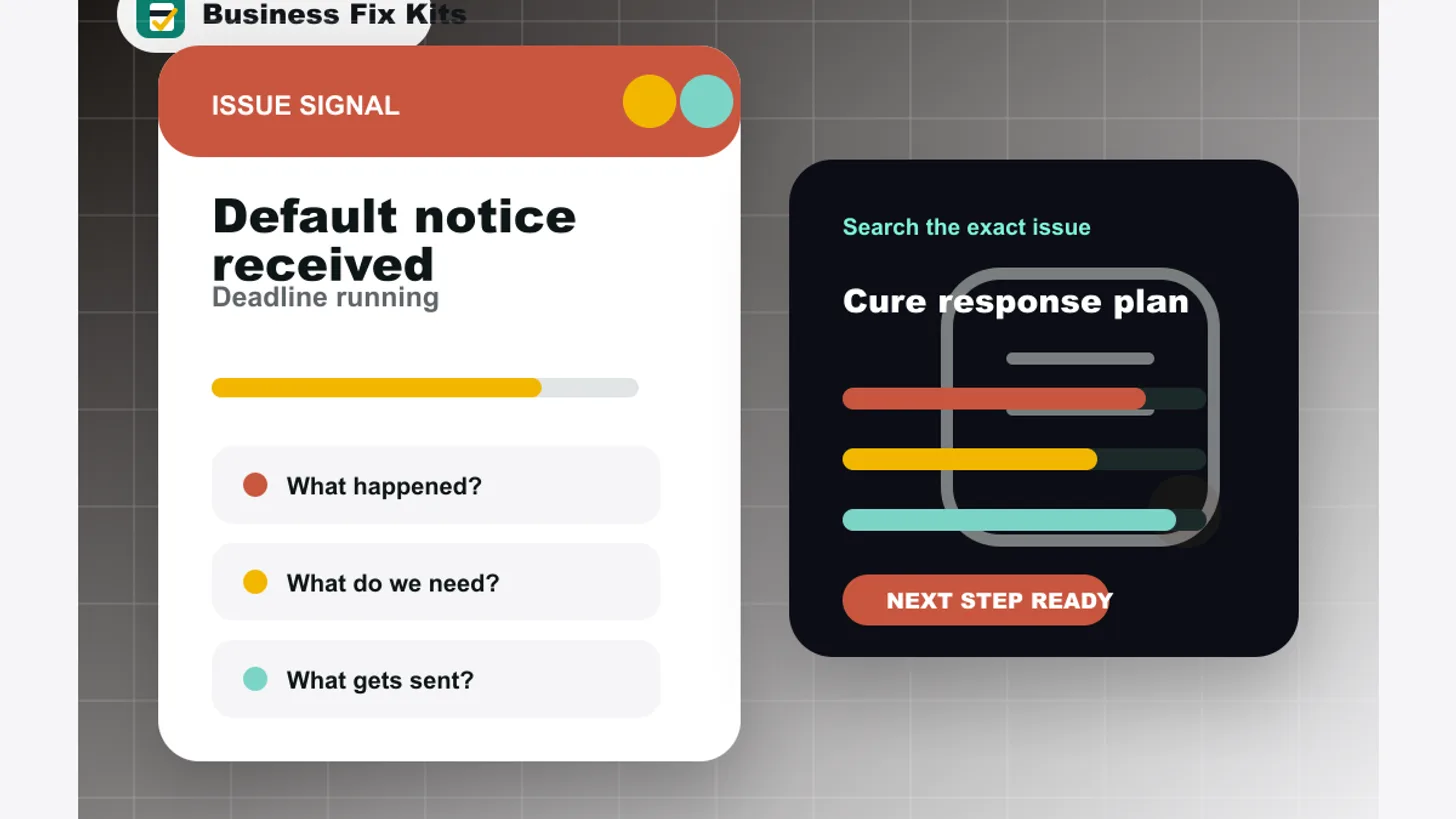
A rent default notice is a deadline problem before it becomes a space problem.
A commercial rent default notice response should confirm the cure deadline, review the lease language, and reconcile the landlord's claim against your actual rent ledger before anyone promises payment or sends a defensive explanation. Small businesses get into deeper trouble when the notice sits unanswered or the response is emotional instead of documented.
Default notices often arrive when cash is already tight. That pressure makes owners want to solve the problem with one fast phone call. A better move is to build a written cure file first so every conversation is grounded in dates, amounts, and realistic next steps.
What a commercial rent default notice usually means
| Notice issue | What it usually signals | What you need first |
|---|---|---|
| Late rent default | The landlord says rent was not received within the lease terms. | Lease payment clause and your rent ledger. |
| Additional charges | Fees, CAM, taxes, or other charges may be included. | Charge detail and backup, not just the total. |
| Cure deadline | You have a limited period to fix the default before escalation. | Exact notice date and cure-period language. |
| Threat of further action | The landlord is preserving rights to lockout, termination, or legal steps. | A documented response path and realistic payment plan. |
The four-part cure file
Why default notices get worse fast
Call in a panic, promise money by Friday, and realize later the balance or deadline was misunderstood.
Confirm the lease terms, verify the balance, and send a written cure path with dates the business can actually meet.
Get the free Emergency Triage Sheet
The first three moves for any business emergency, plus one practical fix in your inbox each week.
No spam. Unsubscribe anytime.
A landlord response script
We received the default notice dated [date] regarding rent due for [period]. We are reviewing the lease terms and our payment ledger to confirm the balance and cure requirements. Based on our current review, we expect to [pay the undisputed amount / send clarification on the disputed amount] by [date]. Please direct any supporting charge detail for the remaining balance to [contact].
Small business example
A restaurant receives a five-day default notice showing base rent, late fees, and CAM charges. The owner wants to explain the sales slump and ask for patience. A stronger move is to first match the notice against the lease, flag the charges that are clear, identify anything unsupported, and then send one written cure plan with dates instead of a stressed verbal promise.
Checklist before the cure window expires
- Confirm the cure deadline from both the notice date and the lease language.
- Separate undisputed rent from charges that still need backup.
- Keep all landlord communication in one file or thread.
- Do not promise payment dates the business cannot hit.
- Save proof of any payment, partial payment, or written response sent.
FAQ: should you call the landlord before replying in writing?
A call can help clarify the situation, but the stronger record is written. Even if you speak first, follow up with a documented summary of what was discussed, what is owed, and what will happen next.
Free version vs. full kit
This article gives you the lightweight version: read the notice carefully, verify the lease and balance, and answer with a real cure plan. The Commercial Rent Demand and Payment Plan Kit adds editable landlord scripts, a payment-offer worksheet, installment structures, and follow-up tracking for high-pressure rent conversations.
View the Commercial Rent Demand and Payment Plan Kit
Read the complete commercial lease dispute guide for CAM, default, and nonmonetary cure lanes.
Related article: A Small Business Cash Flow Forecast Should Tell You Which Bills Get Paid First.
Fix the next one before it starts.
Join the list for the free Emergency Triage Sheet and a new practical fix every week.
No spam. Unsubscribe anytime.