
Why Small Businesses Need Emergency Templates
When a business problem is urgent, blank-page thinking is expensive. Templates reduce hesitation and help teams respond faster.
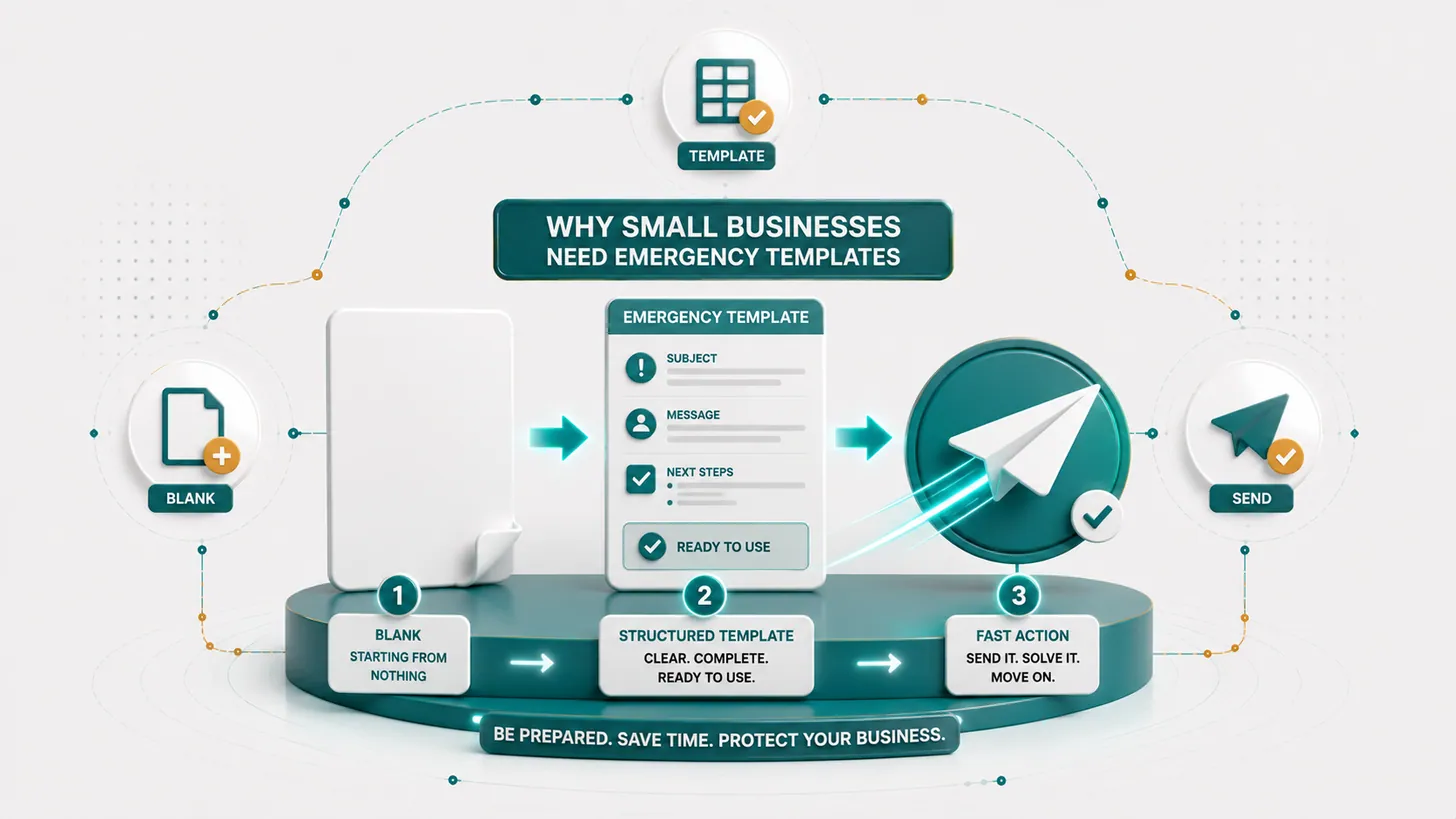
The blank page is the most expensive part of a business emergency.
Small businesses need emergency templates because the hardest part of a tense moment is usually writing the first message or deciding what evidence matters. A ready template turns "where do I even start?" into "adjust these three fields and send."
When a payment is late, a review is hurting trust, or a customer disputes a charge, the cost is rarely the work itself - it is the hesitation, the rewriting, and the inconsistent tone that follows blank-page thinking.
Improvising vs. using a template
| Under pressure | Improvising | Using a template |
|---|---|---|
| Speed | Slow - starts from a blank page | Fast - adapt and send |
| Tone | Reactive, often emotional | Calm and professional |
| Consistency | Varies by who replies | Same standard every time |
| Risk | Says something you regret | Stays factual and safe |
Get the free Emergency Triage Sheet
The first three moves for any business emergency, plus one practical fix in your inbox each week.
No spam. Unsubscribe anytime.
Where templates pay off most
Every emergency starts from zero, so responses are slow, inconsistent, and easy to get wrong.
The first draft already exists, so the owner focuses on facts, tone, and the right next step.
The goal: speed with judgment
Good templates do not make decisions for you. They remove avoidable friction so the operator can move quickly and still apply judgment to the details that matter.
See the kits built for these moments
Fix the next one before it starts.
Join the list for the free Emergency Triage Sheet and a new practical fix every week.
No spam. Unsubscribe anytime.