
Too Many Vacation Requests in the Same Week Need a Coverage Rule Before Good Employees Feel Punished
A vacation request conflict plan helps small businesses balance fairness and coverage when multiple employees ask for the same days off.
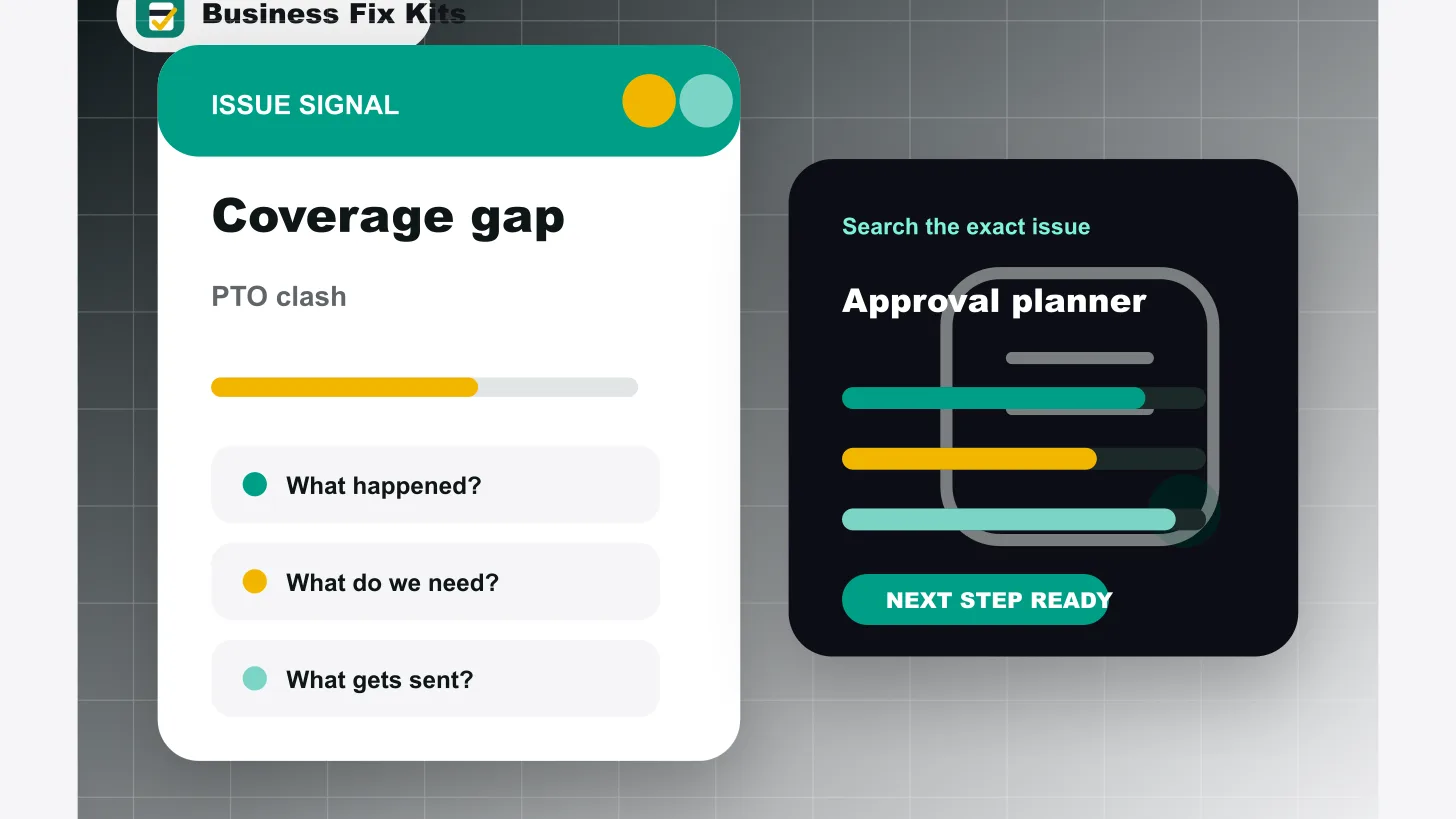
Conflicting vacation requests become a morale problem fast when the business has no shared rule for balancing employee fairness, seasonal demand, and the minimum staffing needed to keep service stable.
A vacation request conflict plan should compare the requests against the coverage floor, use one pre-set decision rule, and document the outcome with backup assignments before the team starts debating fairness in side conversations. Small businesses get the worst of both worlds when everyone feels confused and the schedule still ends up thin.
This problem shows up most often in summer weeks, holiday periods, and school-break windows when several reliable employees all want the same days. If the manager decides by gut feel each time, the decision may solve the week but still damage trust because nobody can tell what standard was used.
The better operating rule is usually a sequence: define the minimum coverage needed, check whether cross-trained backups exist, and then use the same tie-break process every time. That process might be first-approved first-served, rotating priority, or role-based staffing need, but it has to be visible before the conflict happens.
Rules vary by state and employee classification, so verify with your attorney or HR advisor if the requests touch leave laws, union terms, or special protected absences. This article is about ordinary vacation conflicts, not legally protected leave.
What a good vacation conflict decision needs to weigh
| Decision factor | What can go wrong | What you need first |
|---|---|---|
| Coverage floor | The business approves too much time off for a high-demand week. | Minimum staffing by shift or role. |
| Role overlap | Two key people are gone at the same time with no backup. | Cross-training map and backup options. |
| Fairness rule | Employees believe the decision was personal. | A written approval standard or tie-break rule. |
| Communication timing | People make travel plans before the answer is clear. | A response deadline and one owner. |
The four-part PTO conflict file
Why PTO conflicts feel unfair even when the manager means well
Approve the loudest request, delay the rest, and then scramble to cover the gap after the schedule is already broken.
Check the staffing floor first, apply the same tie-break rule every time, and pair approvals with a backup coverage plan.
Get the free Emergency Triage Sheet
The first three moves for any business emergency, plus one practical fix in your inbox each week.
No spam. Unsubscribe anytime.
A manager response you can copy
We received multiple time-off requests for the same dates and are checking them against the coverage needed for that week. We use [rule] when requests overlap, and we will confirm approvals after the backup coverage plan is locked. You will have a final answer by [date], and we will explain any limits based on staffing requirements for those shifts.
Small business example
A five-person landscaping company gets three vacation requests for the week of July Fourth. Two come from top crew leads, and one comes from the office coordinator who also handles supplier deliveries. If the owner approves by seniority alone, the crews may still end up without the right skill mix to finish scheduled work. The better move is to mark the minimum field coverage, identify who can fill the coordinator tasks, and then apply the stated request rule with those constraints visible before the answer goes out.
Sometimes the result is not a full yes or no. One employee may shift dates by a day, or one approval may depend on cross-training another teammate before the week begins. That still feels fairer than a mystery decision because the logic is grounded in the coverage plan rather than on who asked the manager at the best moment.
Checklist before you answer overlapping requests
- Write down the minimum staff count and critical roles for the affected week.
- Apply the same overlap rule every time instead of inventing a new reason for each case.
- Pair every approval with a named backup or cross-trained substitute when possible.
- Respond by a specific date so employees are not left guessing.
- Get HR or legal guidance if the request may be tied to protected leave rather than ordinary vacation.
FAQ: should seniority always decide conflicting vacation requests?
Not always. Seniority can be one tie-break rule, but it should not override the staffing floor or protected leave requirements. The strongest system is the one the team already knows, can explain easily, and can apply consistently without leaving operations exposed.
That usually means documenting more than one factor: the request timing, the role coverage risk, and the agreed rule for overlap. Once those pieces are visible, the answer feels less personal even when someone does not get the first choice.
Free version vs. full kit
This article gives you the free lightweight version: define the staffing floor, apply one overlap rule, and attach a backup coverage plan before approving time off. The full Employee PTO Request + Coverage Planner Kit gives you a request log, approval rule worksheet, coverage tracker, and communication templates for the weeks when too many people want the same days. It is built for teams that need fairness and coverage to live in the same file.
View the Employee PTO Request + Coverage Planner Kit
Related article: An Employee PTO Request Policy Should Protect Coverage, Not Just Approvals.
Fix the next one before it starts.
Join the list for the free Emergency Triage Sheet and a new practical fix every week.
No spam. Unsubscribe anytime.