
An Underpriced Job Needs a Price Adjustment Script Before Margin Disappears
An underpriced job price adjustment process helps small businesses reset scope, explain the issue calmly, and protect profit without sounding chaotic.
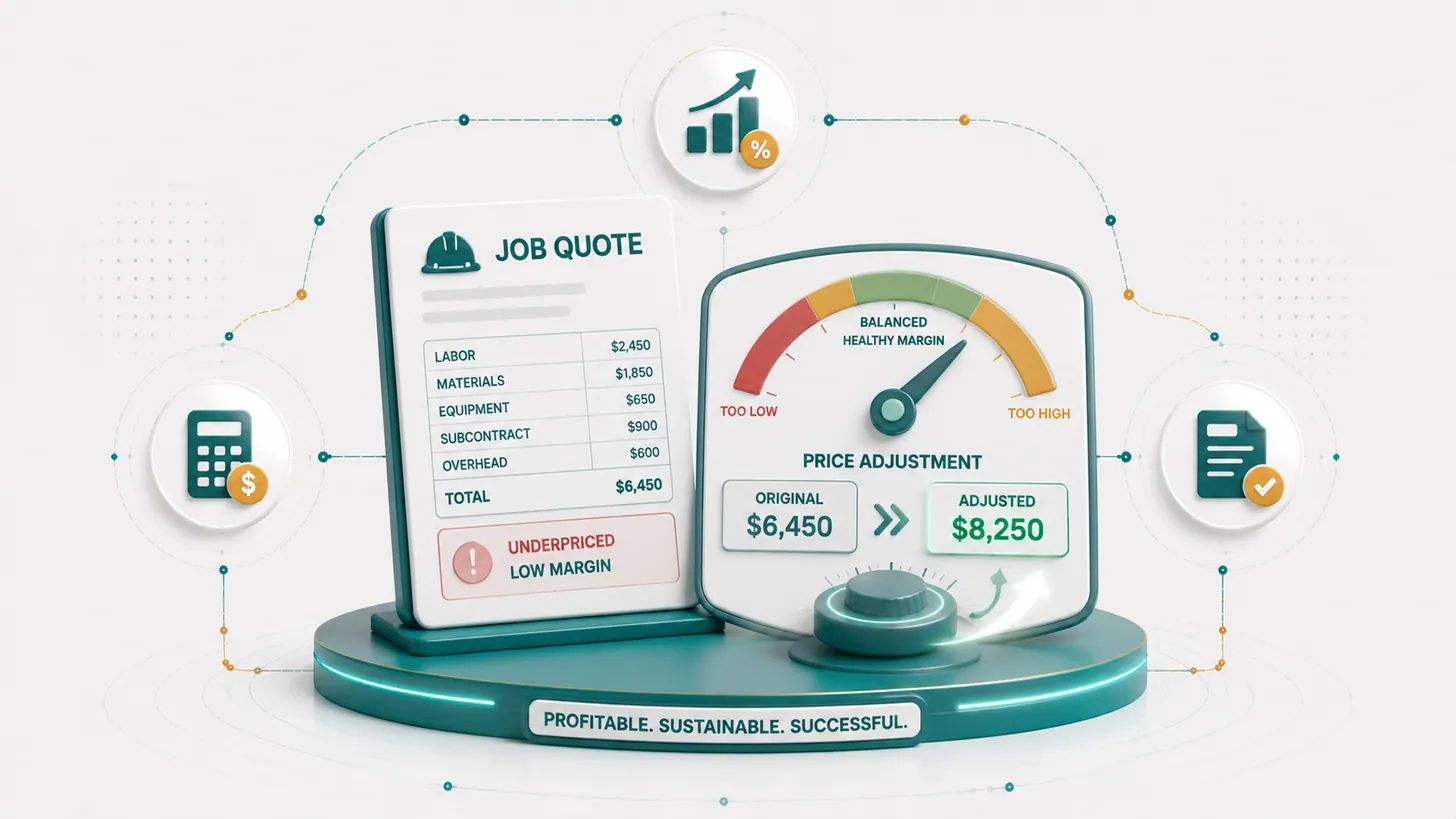
When the numbers are wrong, speed matters less than clarity.
An underpriced job price adjustment should identify what changed or was missed, document the cost impact, and present the customer with a revised path before the work drifts further out of margin. Hoping to make it up later usually creates a second problem on top of the first.
Operators underprice jobs for ordinary reasons: rushed estimates, incomplete scope, supplier cost changes, hidden site conditions, or optimism about labor time. The hard part is not realizing the quote is off. The hard part is saying it clearly enough that the customer sees a business issue instead of chaos.
Why underpriced jobs get worse
- The team keeps working while hoping the math will improve.
- No one writes down whether the issue is an estimating miss or a true scope change.
- The customer hears about the adjustment only after the work is almost done.
- The business tries to absorb the loss and starts cutting corners elsewhere.
The price-adjustment ladder
| Step | Question | Output |
|---|---|---|
| 1. Diagnose | What exactly is underpriced? | Written cost or scope gap. |
| 2. Separate causes | Was this missed scope, changed conditions, or estimating error? | Clear explanation path. |
| 3. Present options | Does price change, scope change, or timing change? | Customer decision set. |
| 4. Confirm approval | What needs written agreement before work continues? | Updated job record. |
We underestimated this job and need to charge more.
After reviewing the scope and actual conditions, we need to update the price for [specific reason]. Here are the revised options and approval step.
A customer script for resetting the job
After reviewing the work and the actual requirements on this job, we found a pricing gap tied to [specific factor]. To complete the scope as discussed, the revised total is [amount]. If you prefer, we can also adjust the scope to stay within the original budget. I want to walk you through both options clearly before we continue.
Get the free Emergency Triage Sheet
The first three moves for any business emergency, plus one practical fix in your inbox each week.
No spam. Unsubscribe anytime.
Comparison: price increase article versus active job reset
A general price increase is a forward-looking message across customers. An underpriced job adjustment is different. It is a live operational correction tied to one scope, one customer, and one approval decision. That is why the wording must be more specific and more documented.
Small business example
A contractor quotes a repair assuming one-day labor, then discovers hidden damage that doubles the time. The wrong move is quietly absorbing the extra hours while growing resentful. The stronger move is documenting the new condition, pricing the impact, and presenting a revised approval before the crew continues into unpaid work.
Price adjustment checklist
- Stop and verify the gap before speaking to the customer.
- Use specific causes instead of broad frustration.
- Offer a revised price, revised scope, or revised timing path.
- Get written approval before continuing the changed work.
- Review the original estimate later so the miss does not repeat.
Free version vs. full kit
This article is the free version: diagnose the gap, explain the issue, and get approval on the reset. The full Underpriced Job Price Adjustment Kit gives you customer scripts, revision templates, objection handling, and internal review prompts for protecting margin when a quote is no longer viable.
View the Underpriced Job Price Adjustment Kit
Related article: How to Raise Prices Without Making Good Customers Feel Blindsided
Fix the next one before it starts.
Join the list for the free Emergency Triage Sheet and a new practical fix every week.
No spam. Unsubscribe anytime.