
An Unclaimed Property Due Diligence Letter Needs a Response Check Before Old Credits Turn Into State Escheat Risk
An unclaimed property due diligence response plan helps small businesses identify the property type, verify the payee record, and document next steps before remittance deadlines hit.
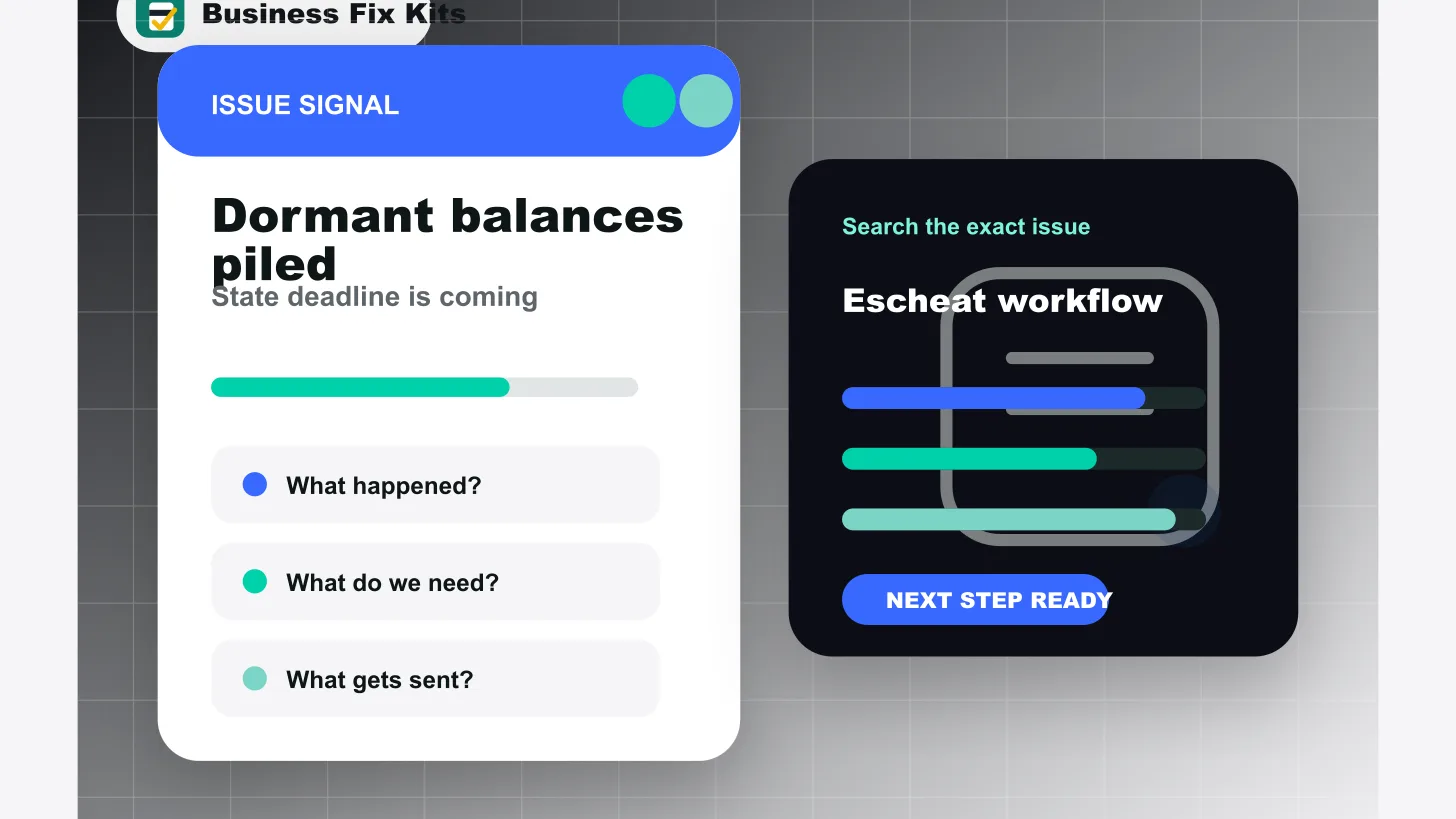
An unclaimed property due diligence letter is really a stale-records problem because the business has to figure out what the property is, who it belongs to, and what can still be resolved before the state deadline arrives.
An unclaimed property due diligence letter response should verify the property type, confirm the owner record, check whether the funds are still payable or already resolved, and document the outreach or filing decision before anyone ignores the notice until remittance time. Small businesses lose time and credibility when old credits and stale checks cannot be explained from the ledger.
The problem is rarely only the letter itself. The letter usually exposes a larger bookkeeping gap: voided checks that were not cleared cleanly, customer credits that never got resolved, or vendor balances that stayed on the books without a real next step. That is why the best response often doubles as a cleanup project.
Another mistake is treating every stale balance the same. A payroll check, a customer refund, and a vendor credit each have different supporting records and different practical questions. The file gets much easier to manage once you sort the items by property type and owner status.
Rules vary by state, so verify with your accountant or attorney if the letter touches dormancy periods, negative-report requirements, or multi-state reporting questions. Those details are where an otherwise simple cleanup can turn technical fast.
What an unclaimed property letter usually forces you to answer
| Letter question | What it usually means | What you need first |
|---|---|---|
| Who owns the property? | The state wants a real owner record, not only an account name. | Payee history, address, and support documents. |
| What is the property type? | The dormancy and reporting logic may differ by item. | Source transaction, account coding, and status notes. |
| Is it still outstanding? | The item may have been replaced, credited, or cleared already. | Bank support, void records, or resolution notes. |
| What happens next? | You need either owner outreach or a filing path. | Deadline tracker and one owner for follow-up. |
The four-part unclaimed property file
Why escheat notices create avoidable chaos
Search the ledger at the last minute, guess whether the item is still open, and hope someone else remembers why it was never cleared.
Match each item to the source record, separate property types, and log the owner outreach or filing decision in one place.
Get the free Emergency Triage Sheet
The first three moves for any business emergency, plus one practical fix in your inbox each week.
No spam. Unsubscribe anytime.
An owner-outreach line you can copy
Our records show an outstanding amount of [amount] associated with [name or account] that may still require action. We are checking our unclaimed property file and want to confirm whether this balance has already been resolved or whether updated payment or contact information is needed. Please respond by [date] so we can update our records before the state reporting deadline.
Small business example
A regional service business receives a due diligence letter listing six dormant items, including two old customer credits, one vendor refund check, and three payroll checks that were never cashed after employee turnover. Instead of treating the letter like a single task, the controller breaks the items into three property types, checks the bank and ledger record for each, and identifies that one payroll item was already reissued while one customer credit should have been written off earlier under a signed agreement.
That leaves only the truly unresolved balances in the active escheat file. Without that sorting step, the business might mail outreach letters on items that are already resolved or report balances that should never have stayed open in the first place. A simple tracker that shows item type, owner, source document, dormancy status, and next action can prevent that confusion from returning next quarter.
Checklist before the filing deadline gets close
- Separate payroll, customer, vendor, and refund items before deciding next steps.
- Check whether the item is actually still outstanding or was already replaced or cleared.
- Save proof of owner outreach and returned mail when that outreach is required.
- Assign one person to own the final report or no-report decision.
- Confirm state-specific reporting details with the right accountant or legal advisor.
FAQ: can you just void the old balance and move on?
Usually not without understanding the property type and the state rule. Voiding an item in the ledger may fix your books internally, but it does not automatically eliminate the reporting obligation if the funds still belong to someone else under state law.
That is why the documentation trail matters. If the business can show how the item was created, what happened to it, and why it is or is not still reportable, the year-end filing becomes much less stressful.
Free version vs. full kit
This article gives you the free lightweight version: classify the item, match it to the ledger, and document the outreach or filing decision. The full Unclaimed Property Audit Response Kit gives you a notice log, owner-outreach tracker, property-type worksheet, and filing-prep checklist for stale-balance cleanups that cannot stay fuzzy. It is built for the operator who needs one defensible record before state deadlines pile up.
View the Unclaimed Property Audit Response Kit
Related article: A Returned Payment Needs a Same-Day Recovery Plan Before Work Keeps Moving Unpaid.
Fix the next one before it starts.
Join the list for the free Emergency Triage Sheet and a new practical fix every week.
No spam. Unsubscribe anytime.