
A Refund Exception Policy Protects Margin Before Every Hard Ask Becomes a Manager Discount
A refund exception policy helps small businesses handle edge-case requests consistently instead of making emotional one-off decisions that train customers to escalate.
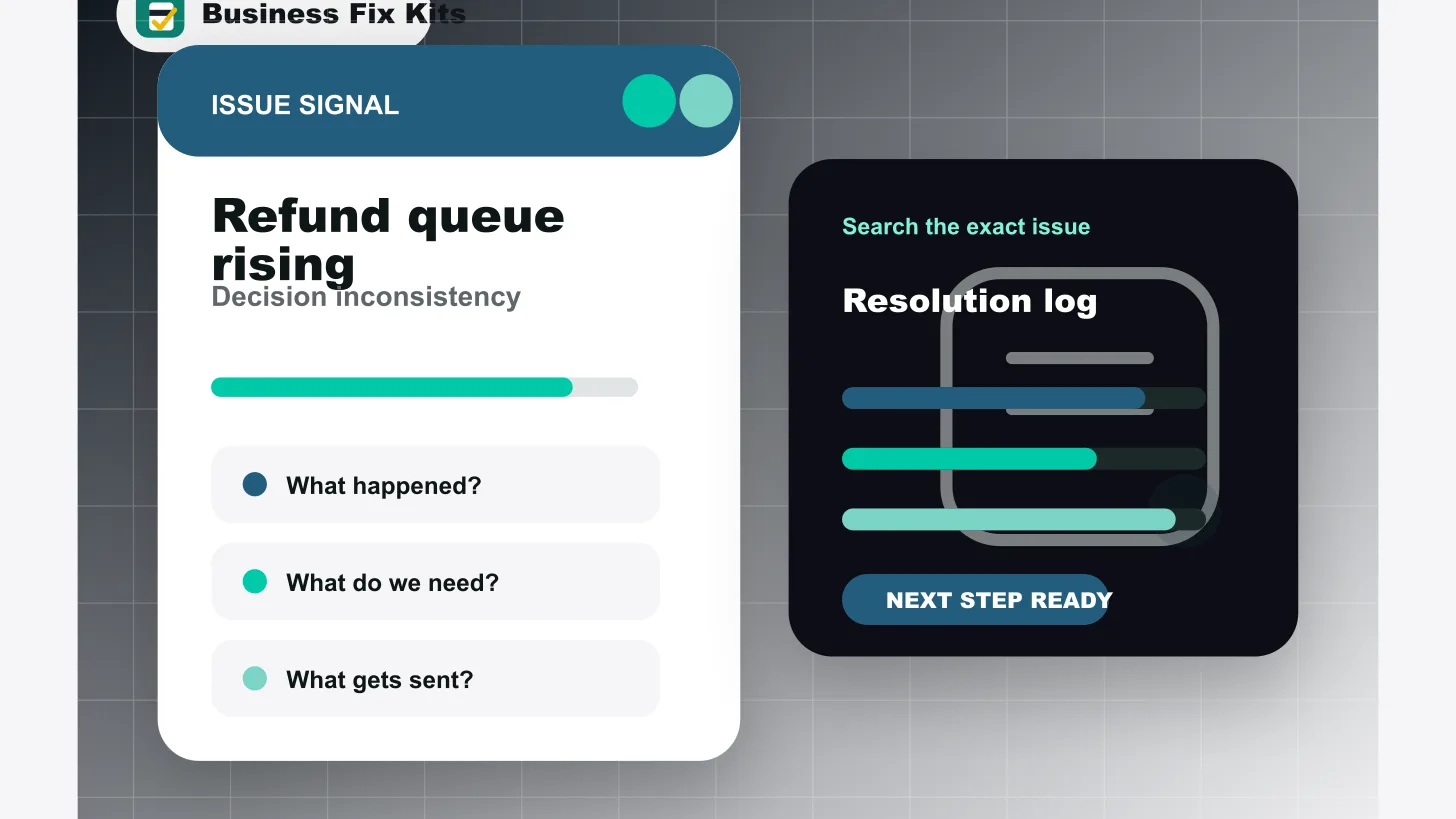
A refund exception policy matters because the hardest requests usually sit outside the normal rules, and without a decision framework the team starts solving pressure with giveaways.
A refund exception policy should define which facts matter, who can approve an exception, what alternatives come before a full refund, and how each decision gets logged for future consistency. Small businesses lose margin when every emotionally difficult case becomes a fresh debate with no decision record.
The first mistake is treating a loud customer as a special category by default. If the team bends the policy whenever someone threatens a chargeback, posts publicly, or demands the owner, the business teaches customers that escalation wins faster than facts.
The second mistake is thinking the only choices are yes or no. Many exception cases are better solved with partial credit, replacement, store credit, rework, or a documented courtesy one-time adjustment. The policy should make those options visible before a full refund becomes the reflex.
Rules vary by state, so verify with your attorney if the issue touches statutory return rights, subscriptions, regulated goods, or payment-network rules. Operationally, though, the core challenge is simpler: edge cases need a framework before they become precedent.
What a refund exception decision should check
| Decision area | What breaks without it | What you need first |
|---|---|---|
| Policy fit | The team forgets what the normal rule actually says. | The published refund policy and order facts. |
| Customer claim | Emotion drives the decision more than the evidence. | Timeline, messages, and product or service details. |
| Alternative remedy | The team jumps straight to a full refund. | Credit, replacement, rework, or partial-refund options. |
| Approval authority | Frontline staff overpromise or escalate too late. | A simple authority ladder. |
The four rules for refund exceptions
Why refund exceptions quietly rewrite the business
The team reacts to anger, social pressure, or urgency, and each one-off exception becomes the new unwritten standard.
The business checks the facts, weighs the policy, and chooses the lowest-risk remedy that still feels fair and defensible.
Get the free Emergency Triage Sheet
The first three moves for any business emergency, plus one practical fix in your inbox each week.
No spam. Unsubscribe anytime.
A refund exception reply you can copy
We checked your request against the order timeline, the service or product details, and our refund policy. Because this situation falls outside the standard policy, we are checking the best available resolution option now. We will confirm the decision and next step by [date/time], including whether the outcome is a refund, credit, replacement, or another remedy.
Small business example
An online retailer sells a consumable product with a clear 14-day unopened-return rule. On day 26, a customer demands a full refund after using most of the product and says they will post on social media if the owner refuses. A weak team either caves instantly or gets defensive. A stronger team checks the order file, checks prior messages, notes that the product was substantially used, and decides whether a one-time store credit or partial courtesy adjustment is cheaper and more consistent than a full refund that teaches the wrong lesson.
That decision also becomes useful later. If five similar cases appear in 60 days, the issue may not be customer behavior alone. The business may need to tighten product-page language, improve onboarding, or change packaging. Without a log, those patterns stay hidden and every case feels unique when it is not.
Checklist before the next exception becomes a precedent
- Pull the published policy and the order facts before discussing what feels fair.
- Define who can approve a partial refund, full refund, or alternative remedy.
- Consider credits, replacements, or rework before a full refund.
- Record why the exception was approved or denied.
- Check repeated exceptions monthly to spot policy or messaging gaps.
FAQ: should you make an exception just to avoid a bad public post?
Not automatically. A public complaint matters, but reacting to public-pressure tactics alone can teach customers that escalation changes the rules. The better move is to assess the facts, the policy, and the business risk before deciding what remedy actually makes sense.
Sometimes that still means a refund. Sometimes it means a credit, replacement, or a documented no. The point of the policy is to keep that choice grounded instead of emotional.
Free version vs. full kit
This article gives you the free lightweight version: compare the facts to the policy, evaluate lower-cost remedies, and log every exception decision. The full Refund Request Triage + Resolution Log Kit gives you a refund decision worksheet, decision matrix, manager approval ladder, and case log for businesses that need consistency before edge-case requests eat margin.
View the Refund Request Triage + Resolution Log Kit
Fix the next one before it starts.
Join the list for the free Emergency Triage Sheet and a new practical fix every week.
No spam. Unsubscribe anytime.