
An Overtime Approval Policy Stops Friday Payroll Surprises Before They Start
An overtime approval policy helps small businesses control labor costs, document exceptions, and reduce avoidable payroll cleanup.
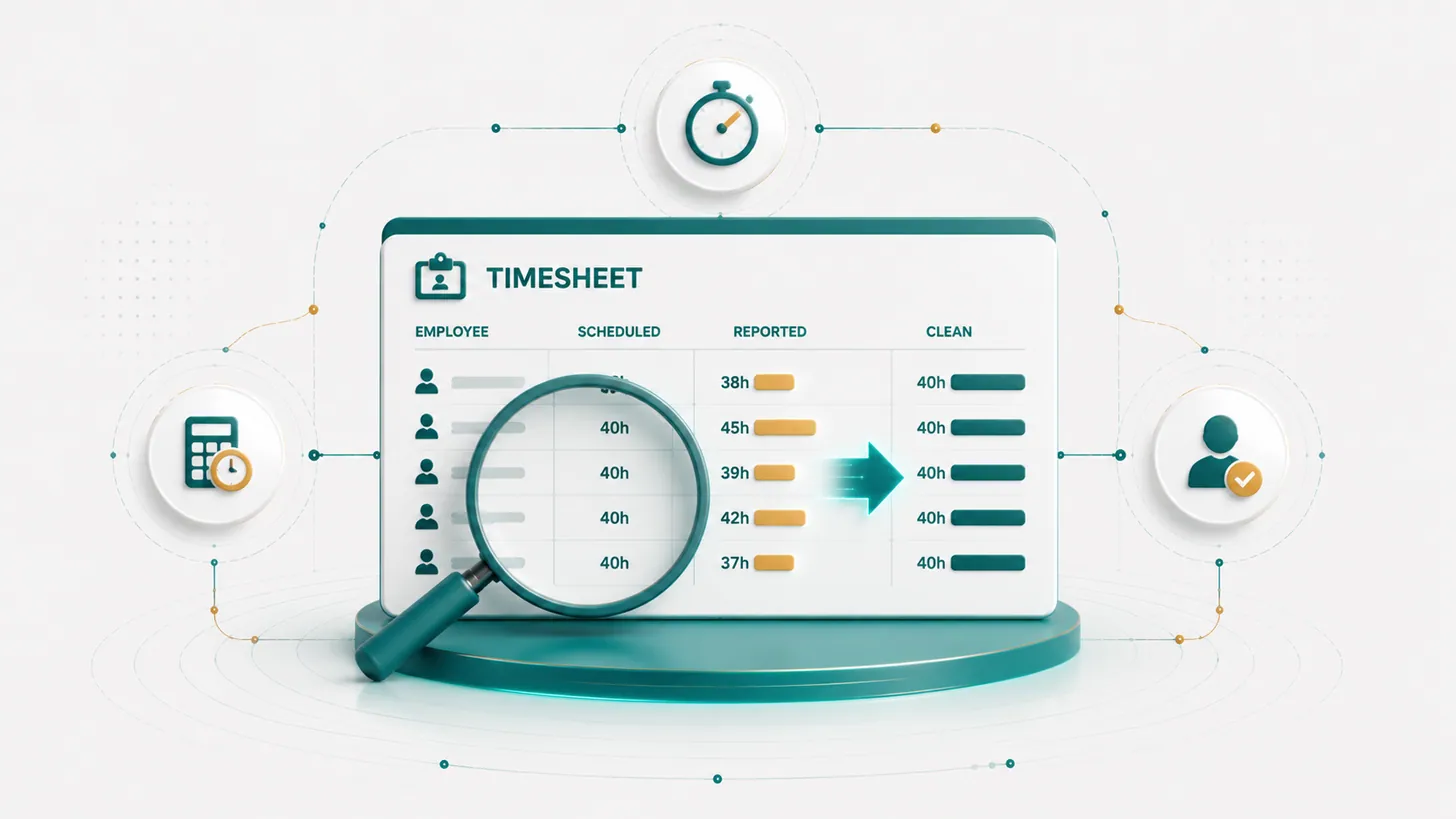
An overtime approval policy works best when it creates a decision before the extra hours happen, not an argument after payroll closes.
An overtime approval policy should define who can approve extra hours, when employees must ask, how emergencies are documented, and how the business checks repeated exceptions. Small businesses lose control when overtime is treated as a surprise that gets discovered only during payroll processing.
The policy should not pretend overtime will never happen. Busy weeks, service calls, closing duties, and short staffing make that unrealistic. The goal is to move overtime from accidental to visible so the business can decide whether to allow it, prevent it, or fix the root cause later.
That is why the best policy is operational, not moral. Employees are not always trying to sneak hours. Managers are not always trying to deny real workload. Most overtime messes come from unclear staffing assumptions, rushed closings, unplanned customer demands, or a supervisor who says stay until this is done without thinking about what payroll will show later.
Rules vary by state, so verify with your attorney or payroll provider if overtime, on-call time, meal breaks, travel time, or role classification questions affect how hours must be tracked or paid in your location.
What an overtime approval policy should answer
| Policy question | Why it matters | Example answer |
|---|---|---|
| Who approves overtime? | Stops employees from guessing. | Direct supervisor or owner only. |
| When must it be requested? | Creates a real checkpoint. | Before shift extension except emergencies. |
| What counts as emergency overtime? | Prevents every exception from feeling justified. | Customer safety, close-out, or critical service event. |
| How is it checked later? | Turns patterns into process fixes. | Weekly payroll and schedule check. |
The four parts of a workable policy
Why payroll gets messy without a written rule
Managers notice extra time after the fact and spend payroll day debating whether the hours were really necessary.
The business already knows which overtime was approved, which was emergency-only, and which recurring problem needs a schedule fix.
Get the free Emergency Triage Sheet
The first three moves for any business emergency, plus one practical fix in your inbox each week.
No spam. Unsubscribe anytime.
A short policy line managers can use
Overtime must be approved by [role] before extra hours are worked whenever possible. If an urgent operational issue requires overtime first, the employee must notify [role] as soon as the situation is stable, and the reason must be documented before payroll is finalized.
Small business example
A repair company keeps finding three to six surprise overtime hours every pay period. The owner blames the field team, but the real issue is that jobs are being scheduled too tightly and nobody is approving end-of-day overruns in real time. Once the company adds a simple approval path and a weekly overtime log, it can separate true customer emergencies from schedule-design problems.
For many teams, the first win is not reducing every hour immediately. It is making the hours explainable. When each overtime line has a reason code such as emergency call, late parts arrival, close-out delay, or coverage gap, the business can stop arguing about whether the labor happened and start fixing why it keeps happening.
The policy also helps supervisors make better tradeoffs in the moment. Sometimes the right call is approve the extra hour because a customer handoff cannot slip. Other times the right call is stop the work, reschedule, or reassign tomorrow. That judgment gets stronger when the company can see the cost pattern instead of discovering it only after the pay period closes.
Even a lightweight overtime log can reveal where the real fix belongs. If the same department needs extra time every Friday, the issue may be staffing, close-out timing, routing, or weak handoffs rather than individual behavior. The policy creates the evidence needed to make that call.
Checklist before your next payroll run
- Name one person or role who can approve overtime.
- Define what employees should do when the overtime is unavoidable.
- Keep a short reason log for every exception.
- Check repeated overtime by team, role, or job type.
- Fix the schedule or staffing issue instead of re-living the same payroll cleanup.
FAQ: can a business ban unauthorized overtime completely?
You can require approval, but the operational reality is that some overtime still happens. The stronger policy does not depend on pretending it never will. It creates a visible rule, captures the exception, and fixes the cause.
Free version vs. full kit
This article covers the free version: set the approval rule, define the exception path, and log the reason. The full Payroll Error + Overtime Cleanup Kit gives you approval forms, correction logs, payroll communication templates, and a prevention workflow for recurring overtime messes.
View the Payroll Error + Overtime Cleanup Kit
Related article: A Payroll Error Cleanup Process Should Fix the Mistake and the Root Cause
Fix the next one before it starts.
Join the list for the free Emergency Triage Sheet and a new practical fix every week.
No spam. Unsubscribe anytime.