
A Lead Response Policy Fixes the Hand-Off Before Good Prospects Cool Off
A lead response policy helps small businesses answer faster, route inquiries cleanly, and stop good prospects from dying between the phone, inbox, and estimate queue.
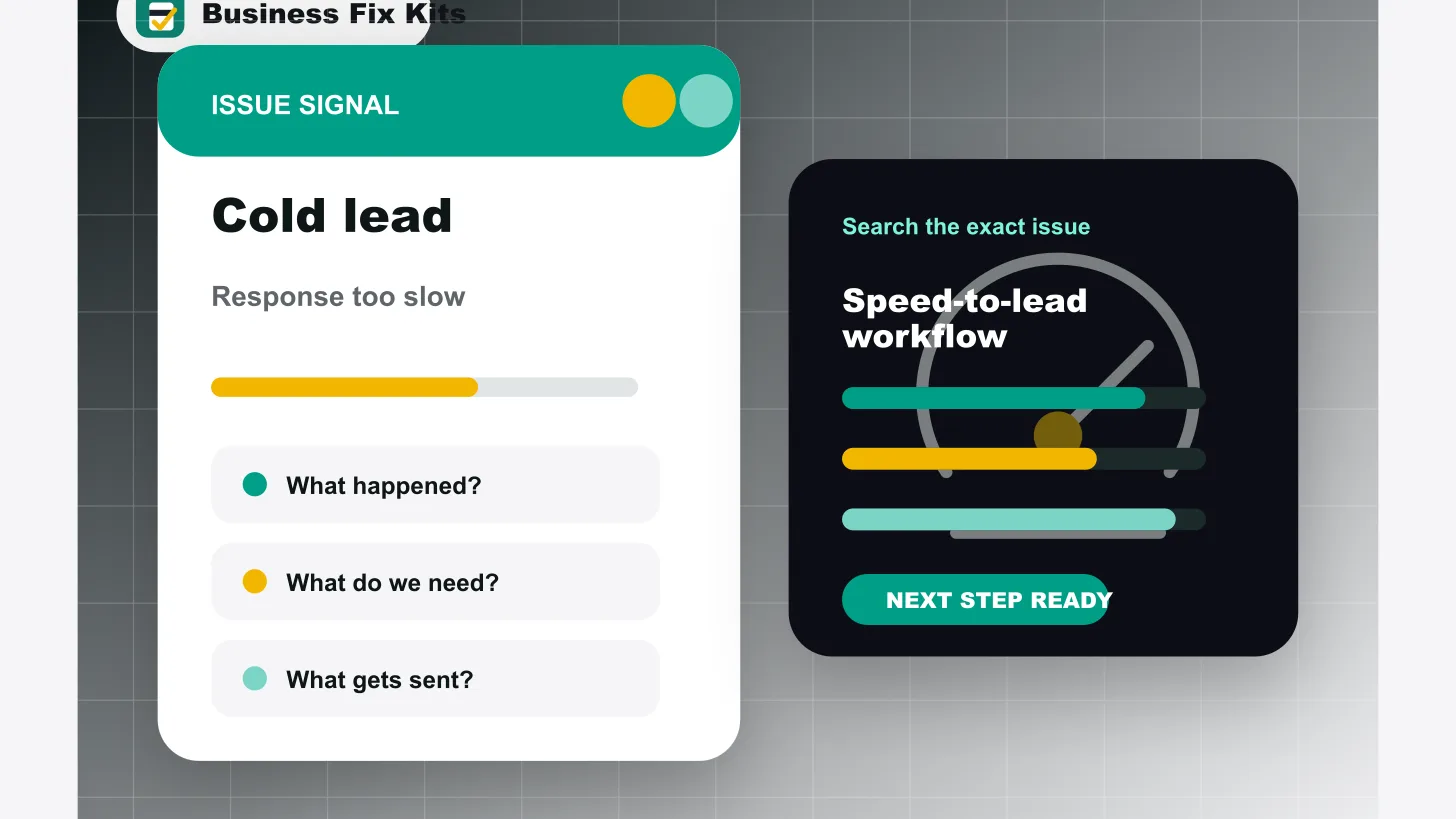
A lead response policy fixes more than speed because it tells the team who owns the first reply, how fast it should happen, and what counts as a real hand-off before a prospect slips into silence.
A lead response policy should set the first-response window, assign one owner for each inquiry source, define the booking hand-off, and show what happens if the assigned person does not respond in time. Small businesses lose warm prospects when the answer path lives in habit instead of a written rule.
Most teams think they have a follow-up problem when they really have an ownership problem. The phone rings, the voicemail lands, the web form notifies three people, and everyone assumes someone else already replied. By the time the team realizes the lead is untouched, the buyer has already contacted the next company.
The second mistake is counting any contact attempt as a win. A generic auto-response or a vague text without a next step may check a box, but it does not move the lead closer to a call, estimate, or booking. The policy should define what counts as a useful first response, not just a fast one.
Rules vary by state, so verify with your attorney if your intake process touches regulated claims, financing, medical information, or consent rules around calls and text messages. For most operators, though, the immediate issue is simpler: the response clock is real even when the policy is not.
What a lead response policy should answer first
| Policy question | What breaks without it | What you need first |
|---|---|---|
| How fast must each lead be answered? | Teams reply based on mood or workload instead of opportunity value. | A simple response-time target by phone, form, and text. |
| Who owns the first reply? | Everyone assumes someone else already handled it. | One named owner for each channel or shift. |
| What counts as a real response? | The lead gets a shallow reply but no path to a call or quote. | A required next-step script. |
| What happens if the owner misses the window? | Warm leads sit untouched until the prospect gives up. | An escalation backup. |
The four rules that keep leads moving
Why fast lead response still fails in small teams
Everyone gets the notification, nobody owns the first move, and the lead gets a late reply after the prospect already booked somewhere else.
The business sets a clock, assigns an owner, and defines the first useful reply so the prospect gets momentum instead of silence.
Get the free Emergency Triage Sheet
The first three moves for any business emergency, plus one practical fix in your inbox each week.
No spam. Unsubscribe anytime.
A first-response policy line you can copy
All new inbound leads must receive a first useful response within [time] through the same channel when possible. The assigned owner must confirm the next step - call, estimate, appointment, or hand-off - and if no response is sent by the deadline, the lead moves to [backup role/person] immediately.
Small business example
A home-service company gets 18 to 25 quote requests a week. The owner thinks close rate is the issue, but a two-week audit shows six web-form leads and three missed-call leads waited more than 90 minutes for a human reply. Two of those prospects later bought from competitors. The company does not need more ad spend first. It needs a rule that web forms get a reply inside 10 minutes during business hours, missed calls get a callback inside 5 minutes, and untouched leads roll to the estimator if the coordinator is busy.
That one change usually sharpens everything downstream. Estimates get scheduled faster, fewer leads need rescue follow-up, and the owner can see whether the real bottleneck is response speed, quote turnaround, or close rate. Without the policy, those problems blur together and the business keeps guessing at why leads go cold.
Checklist before you call your lead process organized
- Set one response-time target for each inbound source instead of one vague rule for all leads.
- Name the first owner and the backup owner for every channel.
- Define what the first reply must accomplish beyond saying hello.
- Track missed windows so repeat hand-off failures stay visible.
- Check warm leads weekly to see whether speed, script, or scheduling is the real leak.
FAQ: is a fast auto-reply enough?
Usually no. An auto-reply can reassure the prospect that the message arrived, but it does not replace a useful human response with a next step. If the buyer still has to wonder who will call, when the estimate happens, or whether anyone actually read the request, the policy did not solve the real problem.
The stronger rule is to treat the auto-reply as support, not as completion. The lead is still waiting until a real person confirms ownership and moves the conversation forward.
Free version vs. full kit
This article gives you the free lightweight version: set the response clock, assign owners, and define the hand-off before the lead goes stale. The full Local Lead Follow-Up Speed Kit gives you a channel-by-channel response matrix, callback scripts, lead tracker, and missed-window backup workflow for teams that need speed to become a system instead of a good intention.
View the Local Lead Follow-Up Speed Kit
Fix the next one before it starts.
Join the list for the free Emergency Triage Sheet and a new practical fix every week.
No spam. Unsubscribe anytime.