
A Late Invoice Phone Script Works Best When the Facts Are Already on the Screen
A late invoice phone script helps small businesses collect overdue payments without sounding flustered, accusatory, or vague about the next step.
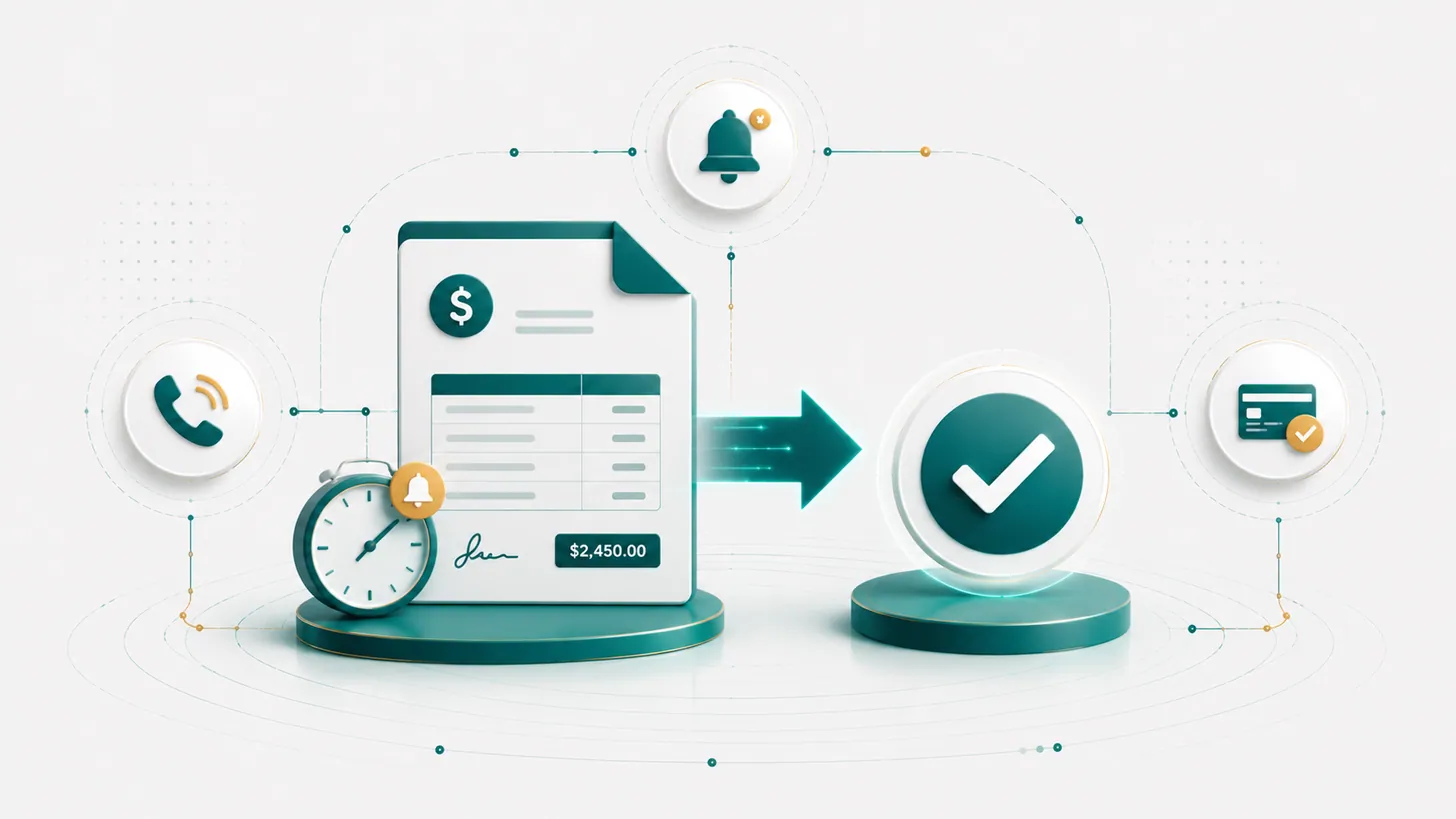
A late invoice call should sound calm because the facts are already prepared before you dial.
A late invoice phone script should confirm the invoice number, amount, due date, and requested payment timing in a direct but professional tone. The point of the call is not to lecture the client. It is to replace silence with a documented commitment or a clearer escalation path.
Phone calls matter because overdue invoices often hide behind soft email language. A client may miss a message, ignore it, or keep promising to get to it later. A short call can surface whether the issue is approval delay, cash timing, dispute, or avoidance.
The biggest mistake is calling without a structure. If you dial while frustrated, the conversation becomes emotional. If you dial without the facts, the client hears uncertainty and stalls more easily.
The phone is especially useful when the receivable matters but the relationship still matters too. A good call lets you hear whether the client is embarrassed, disorganized, constrained by a payables process, or quietly testing how long they can delay. That information helps you decide whether the next step is a resend, a firm deadline, a payment plan, or a pause-work notice.
It also protects your internal team from mixed messaging. When the owner calls one way, the bookkeeper emails another way, and the account manager keeps servicing the account as if nothing is late, the client experiences a business that is not aligned. A short phone script gives everyone the same facts, tone, and escalation point.
Rules vary by state, so verify with your attorney or accountant if collections steps, finance charges, lien rights, or pause-work language are governed by contract terms or local requirements.
What to have open before you call
| Item | Why it matters | What to verify |
|---|---|---|
| Invoice record | Keeps the conversation factual. | Invoice number, amount, due date. |
| Work status | Shows what has already been delivered. | Completed work, open work, or paused work. |
| Prior follow-up | Prevents repeating the same weak ask. | Emails sent and promised dates. |
| Next action | Lets you close the call clearly. | Pay now, promise date, payment plan, or escalation. |
The four-part phone script
What a weak call sounds like versus a useful one
Just checking in on that invoice from a while back and seeing if you had any update for me.
I am calling about invoice [number] for [amount], due on [date]. Can you confirm the payment status and the date we should expect it?
A practical late invoice phone script
Hi [Name], I am calling about invoice [number] for [amount], which was due on [date]. I wanted to confirm whether payment is already in process or whether there is anything holding it up. If it is not already scheduled, what date should we expect payment? I will send a quick recap after this call so we both have the same next step in writing.
Get the free Emergency Triage Sheet
The first three moves for any business emergency, plus one practical fix in your inbox each week.
No spam. Unsubscribe anytime.
Small business example
A design firm has a $4,200 invoice sitting 19 days past due. Three emails were sent, and each one ended with let me know if you need anything. On the phone, the owner learns the client's controller never received the final invoice PDF because it was stuck in a forwarded email thread. That is a real blocker, not bad intent. The call works because the owner confirms the right payables contact, resends the invoice immediately, and gets a promised payment date before hanging up.
In other cases, the call reveals a harder answer: the client is short on cash or unhappy with part of the work. That is still useful. It is better to hear the objection clearly now than to keep sending generic reminders while the invoice ages into a larger collections problem. Once you know the issue, you can decide whether to document a dispute, offer a partial-payment path, or move to a firmer notice.
The follow-up email after the call matters as much as the call itself. Without the recap, the client can later say they did not commit to that Friday payment date or that they thought the office was going to resend the paperwork first. The note turns a verbal conversation into a dated record.
Checklist for calling on overdue invoices
- Know the invoice number, amount, and due date before you call.
- Ask for a specific payment date, not a vague reassurance.
- Write down any blocker the client names.
- Send a same-day recap email after the conversation.
- Follow your escalation policy if the promised date slips again.
FAQ: should you call before sending a final notice?
Often yes, especially if the client relationship matters and the invoice is not deeply aged yet. A call can uncover confusion faster than email. But the call only helps if you document the outcome and stop resetting the clock indefinitely.
When the call does not collect
If the customer still will not commit after a clean call, move to the full customer won't pay invoice collection ladder so reminders, written notices, demand letters, and small-claims prep happen in the right order.
Free version vs. full kit
This article gives you the free version: call with facts, ask directly, and confirm the date in writing. The full Late Invoice Collection Without Burning Relationships Kit adds phone scripts, email ladders, payment-plan wording, pause-work language, and a collections tracker for overdue accounts.
View the Late Invoice Collection Kit
Related article: Collections Letter Template: The 3-Letter Ladder That Works
Fix the next one before it starts.
Join the list for the free Emergency Triage Sheet and a new practical fix every week.
No spam. Unsubscribe anytime.