
An IRS B-Notice Needs an Account-by-Account Control File Before the Withholding Clock Runs Out
An IRS B-Notice response should reconcile the CP2100 list to payer records, identify the correct notice stage, protect the backup-withholding clock, and preserve every payee correction.
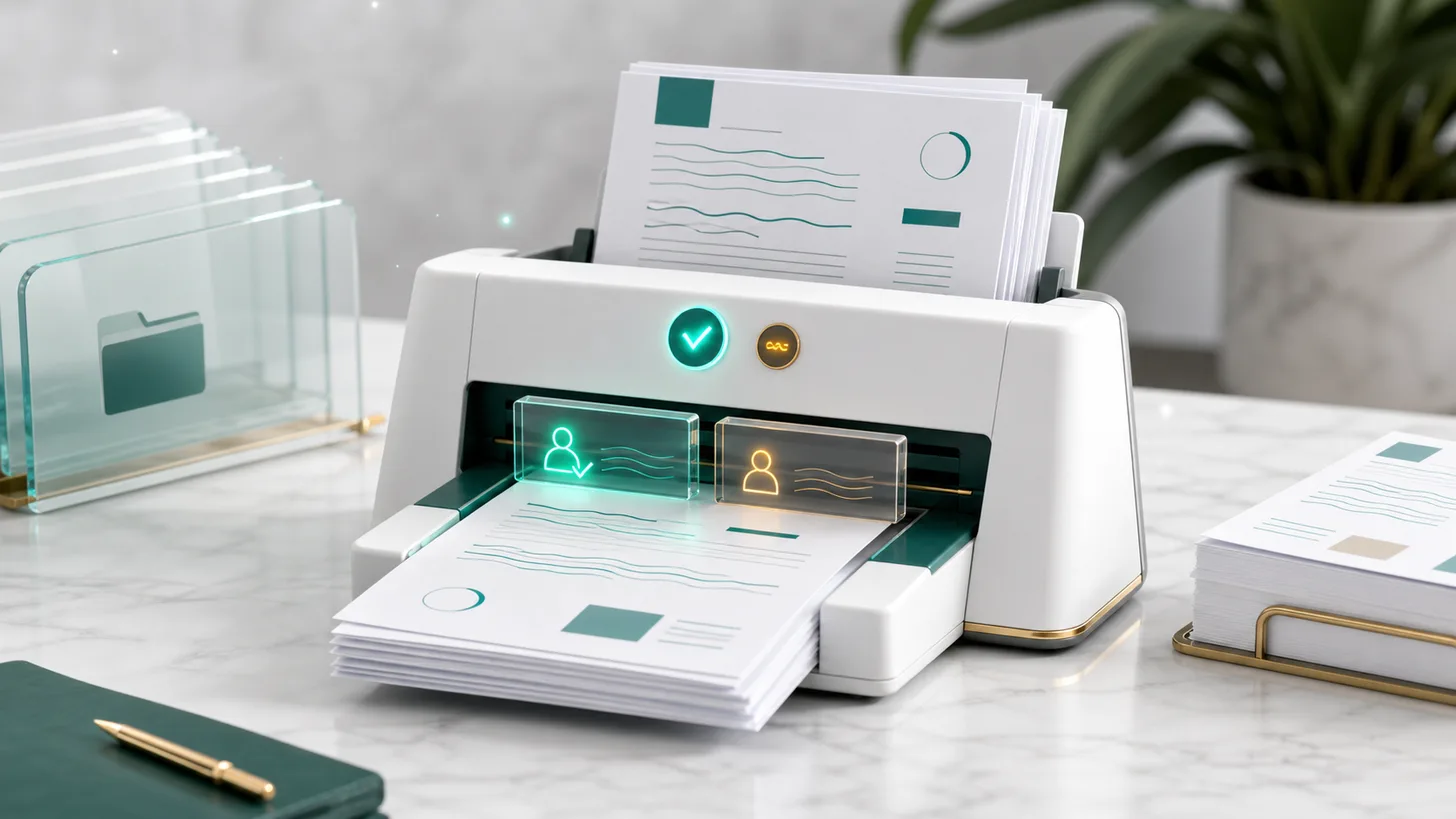
An IRS mismatch file becomes manageable when every listed account has its own record comparison, B-Notice stage, mailing proof, payee evidence, withholding decision, and next action.
For an IRS B-Notice response, preserve the complete CP2100 or CP2100A package, record when it was dated and received, reconcile every listed account to the name, taxpayer identification number, and account number in your own records, then use the current IRS instructions to choose the correct account-specific action. Build the response around the next reportable payment date so the backup-withholding decision cannot disappear inside year-end cleanup.
Do not send a First B-Notice to every payee automatically, rewrite the official notice language, request a TIN by phone, or assume a corrected W-9 is the proof required for a second-notice account.
The IRS B-Notice and Backup Withholding Cure Kit adds editable notice, payee, mailing, withholding, correction, and prevention controls behind this free CP2100 checklist.
Build six lanes before contacting a payee
| Lane | What to capture | Decision it supports |
|---|---|---|
| Notice control | CP2100 or CP2100A, notice date, receipt date, tax year, payer name and TIN, response instructions, and secure storage location. | Which dates, files, people, and current IRS instructions govern the work. |
| Account match | Payee name, TIN ending, account number, filed return record, current vendor record, and any difference between the IRS list and your system. | Whether the listed information actually agrees with the payer record. |
| Notice history | Prior CP2100 or CP2100A entries for the same account, year received, B-Notice sent, and evidence returned. | Whether the current account belongs in a first-, second-, duplicate-, or advisor-review lane. |
| Payee contact | Current address, required IRS enclosure, mailing date, outer-envelope notation, return status, and follow-up owner. | Whether the correct materials were sent and can be proven. |
| Payment control | Next reportable payment, accounts-payable hold or withholding setup, deposit owner, start date, stop evidence, and review date. | Whether the withholding obligation is protected before money leaves. |
| Closeout | Signed W-9 or required validation, vendor master update, future reporting name-TIN, withholding change, preparer review, and archived proof. | Whether the account is corrected without inventing a filing step. |
The IRS CP2100 and CP2100A guidance says to compare the notice list with the payer's records before acting. When the listed name-TIN and account agree with those records, the payer sends the appropriate B-Notice; if the payee does not respond, the IRS says backup withholding must begin on future payments no later than 30 business days after receipt. Current Publication 1281 provides the official notice language and detailed first- and second-notice steps, including a 15-business-day mailing instruction. Use the actual notice, current publication, and qualified tax advice because missing-TIN accounts, incorrect-TIN accounts, prior notices, payment types, and facts do not all follow one shortcut.
Use four controls while the clock is active
The bookkeeper emails every listed vendor for a new W-9, cannot prove which official notice was sent, and notices the next payment only after it clears.
The team compares each record, identifies notice history, uses the current IRS enclosure, saves mailing proof, controls the next payment, and records the evidence that closes the account.
Copy this CP2100 account control row
CP2100 or CP2100A account record
Notice type, date, and tax year: [details]
Date received and proof: [date and source]
Payer name and TIN ending: [details]
Payee account number: [account]
IRS-listed name and TIN ending: [details]
Current payer-record name and TIN ending: [details]
Records agree: [yes / no / uncertain]
Reason for difference if known: [recent update / filing error / system error / unknown]
Prior notice history for this account: [dates, types, and mailings]
Current action lane: [first / second / missing TIN / duplicate / professional review]
Official materials required: [current Publication 1281 items]
Mailing address verified: [source and date]
Materials sent: [date, method, and proof]
Next reportable payment: [date and amount]
Withholding status and effective date: [status]
Payee response received: [date and documents]
Vendor master corrected: [field, owner, and date]
Professional review: [name and question]
Closeout proof and next check: [file and date]
Use a cover note without replacing the IRS notice
Payee cover note:
We received an IRS notice identifying a name and taxpayer identification number mismatch for your account. Enclosed are the official materials required for this account under the current IRS instructions. Please review the enclosure and return only the requested documentation through [secure return method] by [internal response date]. Do not send tax information by ordinary email. Questions about what the IRS requires should be directed to your qualified tax advisor; our contact for delivery and account questions is [name and phone].
This cover note is not the First or Second B-Notice. Use the exact official notice and enclosures from the current Publication 1281, do not improvise certification language, and do not expose full TINs in routine email or shared task systems.
Get the free Emergency Triage Sheet
The first three moves for any business emergency, plus one practical fix in your inbox each week.
No spam. Unsubscribe anytime.
Worked example: six mismatches need four paths
A hypothetical service company receives a CP2100A list containing six contractor accounts. Two records match the filed name-TIN combinations and have no prior applicable notice in the account history. One matches but was listed on an earlier applicable notice. Another vendor changed from a sole proprietorship to an S corporation after the filing year, and the current accounting record no longer shows what was filed. The final two entries contain account-number or transcription differences between the IRS list and the payer export.
The controller does not send one W-9 request to all six. She preserves the filed-year vendor export, compares each listed row, checks prior-notice history, routes first- and second-notice accounts through the current IRS instructions, documents the entity-change evidence separately, and gives the remaining differences to the tax preparer. Accounts payable adds the next payment date and control status to every row. The example shows record discipline; it does not determine the legal or tax treatment of a real payee.
IRS B-Notice response checklist
- Save the complete CP2100 or CP2100A package, envelope, electronic delivery record, and filed-year data.
- Record the notice date, receipt date, tax year, payer identity, and responsible tax professional.
- Secure the full-TIN file and use masked identifiers in ordinary workflow views.
- Reconcile every IRS-listed name, TIN ending, and account number to the payer's filed and current records.
- Research prior CP2100, CP2100A, and B-Notice history account by account.
- Use the current Publication 1281 to identify the correct notice stage, enclosure, mailing, and evidence path.
- Verify the payee address and preserve mailing and returned-mail proof.
- Calendar the next reportable payment and required backup-withholding decision.
- Give payroll, accounts payable, and deposit owners only the access and instructions they need.
- Record the signed W-9 or required validation received and the exact vendor-master fields updated.
- Do not send corrected information returns merely because a name-TIN record changed; ask a qualified preparer when a correction is actually required.
- Archive the notice history, action, evidence, withholding status, and future reporting record together.
FAQ: can every payee fix a B-Notice with a new W-9?
No. The required evidence depends on the account's facts and notice history. Current Publication 1281 generally pairs a first B-Notice with Form W-9, while a second applicable notice within the defined history uses a different validation process and says not to include Form W-9. Missing or obviously incorrect TIN situations also require separate handling. Use the official publication and a qualified tax professional for the actual account.
Connect the mismatch to vendor and tax controls
If the problem started before filing because a vendor never supplied usable information, use the vendor W-9 and payment-gate guide. The small-business tax notice response guide helps verify the notice, deadline, channel, and professional handoff. If the notice also exposes a payroll-tax or deposit problem, keep that work in the separate payroll tax notice reconciliation file.
Free version vs. full kit
This article gives you the free version: the six-lane response map, account control row, payee cover note, worked example, and checklist. The paid kit adds editable B-Notice, payee, mailing, payment, withholding, correction, support, and prevention tools for a controlled response.
Get the IRS B-Notice and Backup Withholding Cure Kit
The All-Access membership includes the complete kit library while membership is active. The one-time IRS B-Notice kit remains the primary next step for this article.
Fix the next one before it starts.
Join the list for the free Emergency Triage Sheet and a new practical fix every week.
No spam. Unsubscribe anytime.