
A Customer Complaint Follow-Up Email Proves the Fix Before the Relationship Drifts Away
A customer complaint follow-up email helps small businesses close the loop after service recovery instead of assuming the issue is solved because the first apology landed.
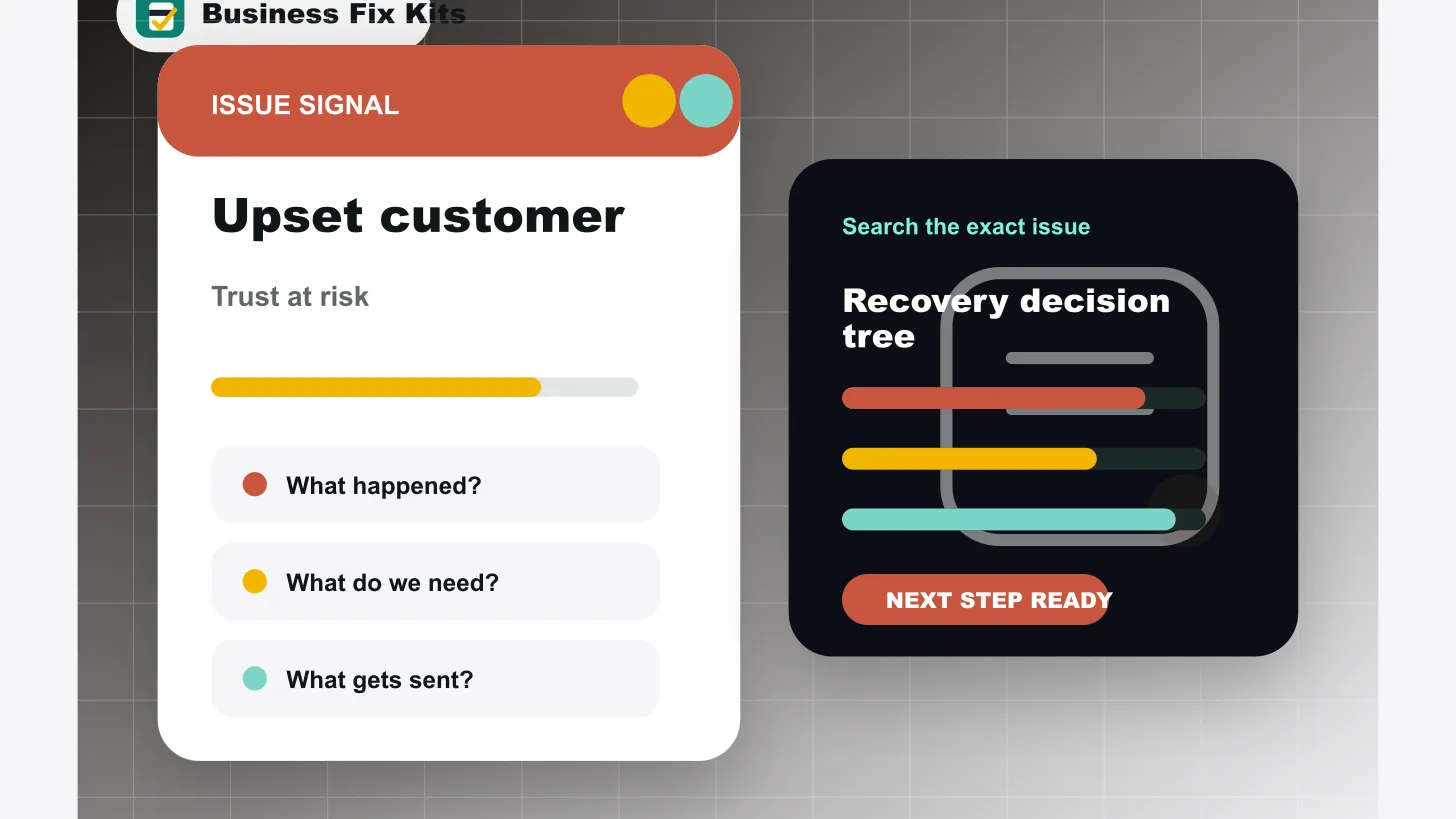
A customer complaint follow-up email matters because the recovery is not finished when the first apology is sent - it is finished when the customer understands the fix and the business learns enough to keep the problem from quietly returning.
A customer complaint follow-up email should recap the issue, confirm the fix or next step, invite one final clarification path, and help the business document what changed internally. Small businesses reopen solved problems when they assume the customer understood the resolution just because the live conversation ended politely.
The first mistake is sending no follow-up at all. That leaves the customer to remember the conversation from their own angle, which may not include the promised timeline, refund, rework, or internal correction the team believes was clear.
The second mistake is turning the follow-up into a premature rating request. If the customer still is not sure the issue is truly fixed, asking for a rating or testimonial too soon can feel tone-deaf and undo the recovery work that just happened.
Rules vary by state, so verify with your attorney if the complaint touches privacy, billing disputes, regulated service requirements, or formal claims. In ordinary operations, though, a simple post-resolution message often makes the difference between a closed loop and a lingering trust leak.
What a complaint follow-up email should include
| Email element | What breaks without it | What you need first |
|---|---|---|
| Issue summary | The customer and team may remember the problem differently. | A plain-language recap. |
| Resolution detail | The fix sounds vague or incomplete. | What was changed, refunded, replaced, or rescheduled. |
| Next-step path | The customer does not know what to do if the issue is still not right. | One contact route and one timing note. |
| Internal lesson | The same complaint repeats because nobody records the root cause. | A note on the process gap. |
The four rules for a useful follow-up email
Why complaint recovery often stops one step too early
The team apologizes live, assumes the matter is closed, and never checks whether the customer understood the fix or whether the same issue is already happening again.
The business confirms the resolution in writing, leaves one clear reply path, and records the process change behind the recovery.
Get the free Emergency Triage Sheet
The first three moves for any business emergency, plus one practical fix in your inbox each week.
No spam. Unsubscribe anytime.
A complaint follow-up email you can copy
Thank you again for raising the issue with us. We checked what happened and completed the following resolution: [brief fix]. You should now expect [next step or outcome]. If anything still does not look right, reply directly to this message by [date/time], and we will check it immediately.
Small business example
A landscaping company resolves a complaint about a missed gate latch and damaged flower bed by sending a crew back the next day. The customer is polite on the phone, so the office assumes the issue is finished. Three days later, the customer posts a negative public rating saying the manager never followed up and the reseeded area still looked unclear. A simple written summary sent after the corrective visit - what was repaired, what recovery was offered, and when to reply if anything still looked wrong - could have closed that gap before it turned public.
The follow-up email also helps the business learn. If the complaint came from a hand-off miss, weak closeout checklist, or rushed crew departure, that lesson should land somewhere beyond one manager's memory. Otherwise the recovery work stays expensive because the same failure keeps repeating under new customer names.
Checklist before you call the complaint closed
- Summarize the issue and the agreed resolution in plain language.
- Tell the customer what should happen next and by when.
- Give one direct reply path if the issue still is not fully resolved.
- Wait until the recovery is stable before asking for a rating or referral.
- Log the process lesson behind the complaint.
FAQ: should a follow-up email ask for feedback right away?
Usually not. Right after a complaint, the first goal is clarity and trust, not marketing. Asking for feedback too quickly can make the business sound more concerned with optics than with the actual recovery.
Once the customer confirms the issue is truly resolved, a later feedback ask may make sense. The follow-up email itself should focus on closing the loop cleanly.
Free version vs. full kit
This article gives you the free lightweight version: summarize the complaint, confirm the fix, leave one reply path open, and capture the internal lesson. The full Customer Complaint + Service Recovery Kit gives you triage steps, resolution templates, follow-up scripts, and a case log for teams that want fewer reopened complaints and cleaner recovery communication.
View the Customer Complaint + Service Recovery Kit
Fix the next one before it starts.
Join the list for the free Emergency Triage Sheet and a new practical fix every week.
No spam. Unsubscribe anytime.