
Business Identity Theft and EIN Fraud Need a Record Lock Before a Response
Business identity theft involving an EIN needs an authenticated notice, entity-and-account map, incident record, official reporting path, and controlled professional handoff.
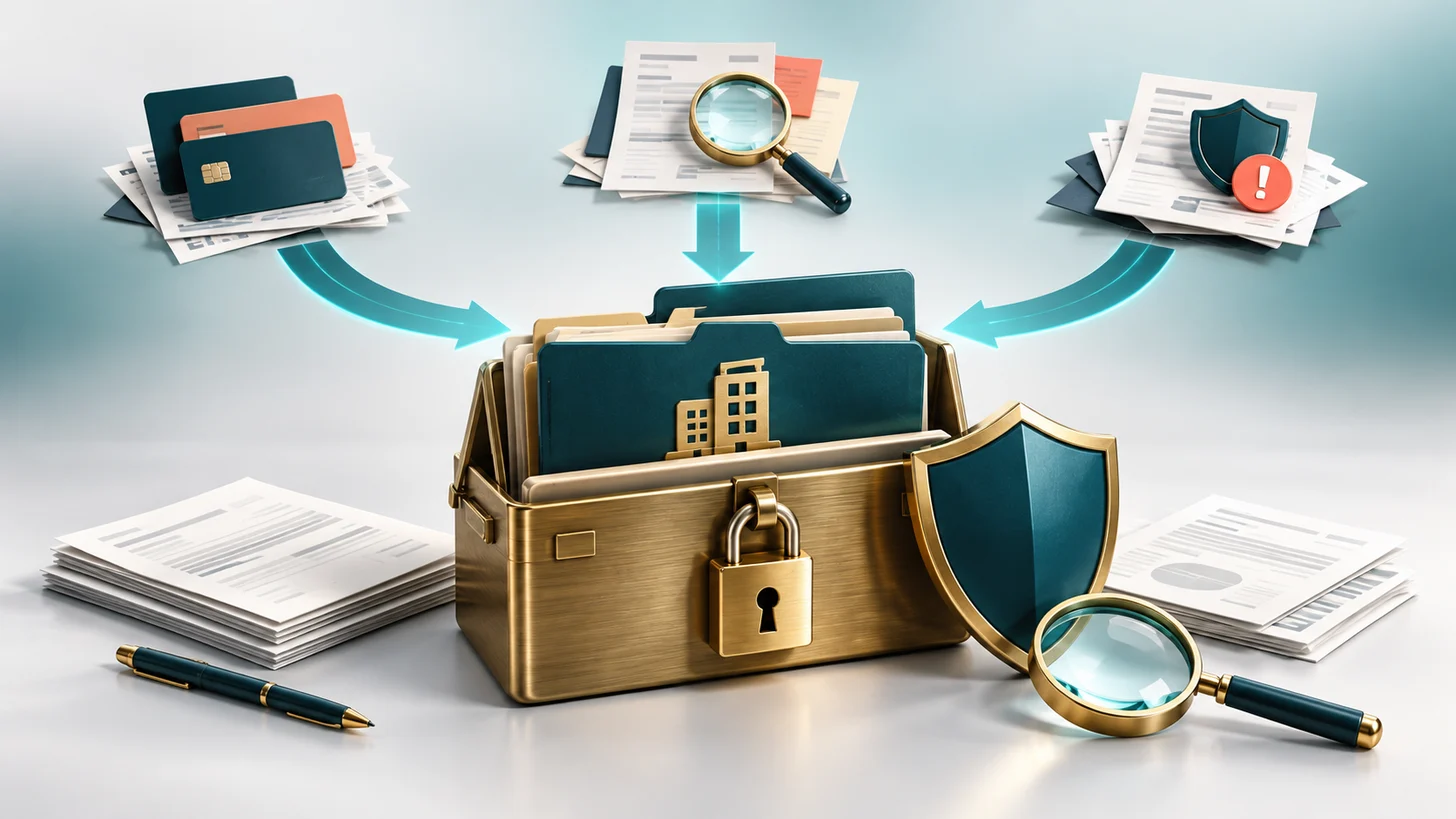
An EIN fraud signal becomes a manageable case when the owner separates confirmed facts, affected accounts, official reports, professional decisions, and recovery proof.
If an EIN, tax notice, filing, account, credit record, or government letter suggests someone used your business identity, first authenticate the signal through a trusted agency, bank, vendor, or account path. Preserve the original record, restrict access to formation and tax files, list every affected entity and account, and record what is confirmed versus suspected before submitting a report or disputing an entry.
Part of the complete guide: IRS Notice Small Business Response Guide
Do not call the number in a suspicious message, email full tax records to an unknown address, apply for a replacement EIN, or state that every unfamiliar record is fraud before the source is checked. Business identity theft can overlap with account takeover, mail diversion, false filings, unauthorized credit, or an administrative mismatch, and each lane may have a different owner.
The Business Identity Theft + EIN Fraud Response Kit adds editable incident, entity, account, evidence, agency, creditor, professional-review, submission, and recovery controls when several institutions or team members are involved.
Classify the signal before choosing a report
| Signal lane | First facts to preserve | Immediate control |
|---|---|---|
| Unexpected EIN assignment | Original IRS notice, entity name, address, notice date, and who actually requested an EIN. | Verify the notice through an official IRS path and restrict formation records. |
| Unknown tax filing or balance | Authenticated transcript or notice, form, period, amount, address, preparer, and filing status. | Calendar the notice deadline and route the tax decision to a qualified professional. |
| Unauthorized bank, credit, or vendor account | Institution, masked account, application or transaction date, contact history, and current exposure. | Use the institution's verified fraud process and protect legitimate accounts. |
| Secretary-of-state or license change | Entity number, filing image, effective date, submitter details if shown, and current registered information. | Contact the official registry and preserve the disputed filing before correction. |
| Suspicious email, call, or letter only | Sender, domain, phone, headers, envelope, request, link, and timestamp. | Do not reply or disclose records until an independent channel confirms it. |
The IRS page for an EIN you did not request directs a business to use Form 14039-B for business identity theft and, when online submission is not available, to use the address or fax shown in the IRS letter. Use the current form instructions and the authenticated notice as controlling. A tax professional or attorney should decide tax positions, filing corrections, deadline protection, and statements made under penalty of perjury.
Keep five response lanes separate
The fifth lane is recovery: every correction, remaining balance, access reset, acknowledgment, monitoring date, and closeout proof. A report confirmation is evidence that a submission occurred; it is not proof that every account, filing, or liability has been corrected.
The owner calls numbers in incoming messages, emails complete tax files widely, disputes unrelated accounts, and cannot show which facts are confirmed.
The owner authenticates each source, limits access, maps the exact exposure, uses official channels, and records every decision and result.
Copy this business identity incident row
Business identity incident record
Business legal name and DBA: [details]
EIN ending and entity number: [masked details]
Signal received: [notice, filing, account, transaction, credit, other]
First seen, source, and delivery channel: [details]
Independent authentication path: [official URL, account, or number]
Confirmed fact: [fact and source]
Suspected but unconfirmed item: [question]
Affected account, filing, period, or institution: [details]
Deadline or loss exposure: [date and amount if verified]
Access restricted or reset: [action, owner, date]
Evidence preserved: [files and hashes or locations]
Official report or case: [channel, reference, timestamp]
Professional question and reviewer: [details]
Correction requested and proof: [details]
Next check and unresolved exposure: [owner and date]
Use a narrow institution notice
We are the authorized representatives for [legal business and masked identifier]. Through [verified source] on [date], we identified [specific unfamiliar account, filing, transaction, or change]. Our current records show [confirmed facts]. We dispute only the items listed in the attached index and request the institution's official fraud, correction, or investigation process. Please confirm receipt, identify the secure channel for any required records, and provide the case reference and next review step. Sensitive identifiers will be supplied only through the approved secure process.
Get the free Emergency Triage Sheet
The first three moves for any business emergency, plus one practical fix in your inbox each week.
No spam. Unsubscribe anytime.
Worked example: an EIN notice for an unknown entity
A hypothetical owner receives an IRS notice showing an EIN for a name similar to the company's trade name. The owner does not call the phone number in a forwarded scan. The finance lead preserves the envelope and notice, opens the official IRS guidance from a trusted browser, compares the exact legal name and address with formation records, and checks who had access to tax files.
The mismatch appears real, so the team records the event, restricts sensitive folders, asks its tax adviser to review the notice and current Form 14039-B path, and keeps the report confirmation with a separate list of bank, registry, credit, payroll, and vendor checks. No one promises that submitting one affidavit erases every downstream record. The example demonstrates case control, not a tax or legal conclusion.
Business identity theft response checklist
- Preserve the complete notice, envelope, email headers, account screen, filing, or transaction.
- Authenticate the sender or account through a trusted official path.
- Record confirmed facts separately from suspected misuse.
- Restrict access to tax, formation, ownership, banking, and identity records.
- Map every legal entity, DBA, EIN, registry number, address, and authorized person.
- Check tax, banking, credit, vendor, payment, insurance, benefits, licensing, and registry lanes as relevant.
- Calendar every notice, dispute, filing, and professional-review deadline.
- Use only the report, affidavit, or correction path that matches the confirmed event.
- Save submission proof, case numbers, correspondence, corrections, and next checks.
- Have qualified tax, legal, accounting, cybersecurity, or fraud professionals decide issues in their lane.
FAQ: should the business apply for a new EIN?
Do not assume a new EIN is the fix. EIN changes are controlled by IRS rules and the facts of the entity. Preserve the current records and have the IRS or a qualified tax professional advise whether any identifier action is appropriate.
Connect identity misuse to access and payment controls
If the signal followed a compromised mailbox or fraudulent payment instruction, use the business email compromise response. If personal or customer information may have been exposed, open the small-business data breach fact clock. If a bank account is restricted during the review, use the business banking continuity plan without treating the disputed exposure as available cash.
Free version vs. full kit
This article gives you the free version: signal table, five response lanes, incident row, institution notice, worked example, and checklist. The paid kit adds editable entity, access, account, evidence, agency, creditor, professional-review, submission, recovery, and closeout tools.
Build the case with the Business Identity Theft + EIN Fraud Response Kit
The All-Access membership includes the full kit library while membership is active. The one-time identity theft kit remains the primary next step for this article.
Fix the next one before it starts.
Join the list for the free Emergency Triage Sheet and a new practical fix every week.
No spam. Unsubscribe anytime.