
A Frozen Business Bank Account Needs Continuity Before Persuasion
A business bank account frozen guide helps owners protect payroll, map payment rails, build a KYC packet, and open backup banking before cash flow stops.
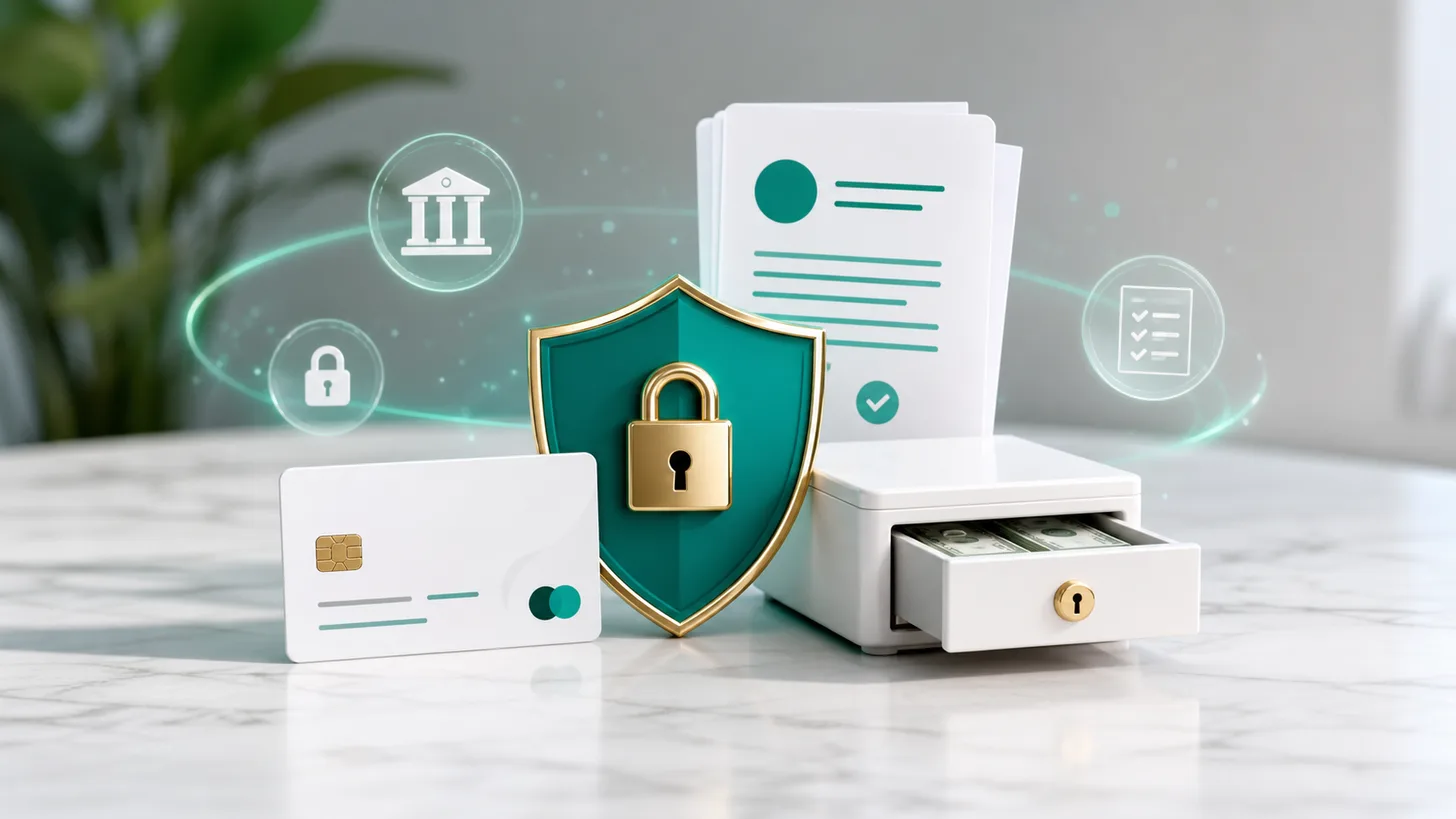
A banking freeze gets less dangerous when continuity, proof, backup rails, and customer communication move in parallel instead of one at a time.
If a business bank account is frozen or scheduled for closure, save the notice, identify what transactions are blocked, map every payment rail touching the account, build one KYC or source-of-funds packet, and start backup banking immediately. The direct answer is continuity first, persuasion second.
Owners often lose the first day arguing with the branch, moving money blindly, or sending random documents. Bank reviews are usually handled by risk or compliance teams, and FinCEN customer-due-diligence rules mean banks may ask to verify entity, owner, and activity information. Your response should be organized, factual, and logged.
The Business Bank Source of Funds Review Response Kit gives you the document packet, activity explanation script, and payment-rail tracker for this review.
Your card declined at the supplier, every transaction is blocked, and payroll runs Thursday. Freezes and closures feel catastrophic, but they are usually procedural and survivable if you respond in the right order. This is the order.
First, figure out which situation you are in
"Frozen" and "closed" are different problems with different plays. So is a processor hold, which owners often mistake for a bank freeze.
| Situation | What it looks like | Typical driver |
|---|---|---|
| KYC or verification review | Transactions blocked or limited; the bank requests documents (ownership, EIN, licenses, source of funds). | Periodic re-verification, a trigger transaction, or stale account information. |
| Risk or compliance freeze | Everything blocked; the bank says little or nothing. | Automated monitoring flagged activity. The bank may not be permitted to explain. |
| Legal hold | Freeze tied to a levy, garnishment, or court order. | A creditor, tax agency, or court. The bank is carrying out the order. |
| Account closure notice | A letter or message giving a date after which the account closes. | Often "de-risking": the bank exiting an industry or customer profile. |
| Merchant or processor reserve | The bank account works; your payment processor is holding payouts. | Chargeback or volume spikes, or a category review. See the merchant reserve hold release playbook. |
Two hard truths to absorb early:
- The bank often will not tell you why. When a freeze stems from a suspicious-activity process, federal confidentiality rules generally bar the bank from disclosing it. Pressing a frontline banker to "just tell me" burns time. Focus on what they need, not why.
- Banks can generally close accounts at their discretion. Most deposit agreements allow closure with notice; read yours for the exact notice terms. The fight worth having is usually about your money and your continuity, not forcing the bank to keep you.
What to do in the first 48 hours
| Workstream | Action | Why it matters |
|---|---|---|
| Notice file | Save the email, letter, portal message, case number, and deadline. | You need the exact concern, not a summary from memory. |
| Payment rails | List payroll, taxes, rent, processors, vendor debits, customer deposits, and loans. | Shows what breaks if the account stays frozen. |
| Review packet | Match entity, ownership, source-of-funds, invoices, contracts, and processor statements. | Answers the bank's risk question in one place. |
| Backup access | Open or activate a second operating account and redirect future flows carefully. | Protects operations without betting everything on appeal timing. |
Hours 0 to 4: stabilize
- Do not rage at the bank. Calls are typically logged, and you are now managing a compliance process.
- Call the business banking line and ask three precise questions. Is the account frozen or being closed? What exactly do you need from me, in writing? What is the timeline, and who is my point of contact? Start a log with the date, time, name, answers, and every reference number.
- Get everything in writing. Ask for the document request or closure notice by email or secure message. Verbal-only is how deadlines get missed.
- Download everything now. Statements going back at least a year or two, transaction history, tax payment confirmations, and the deposit agreement. If the account closes, online access may end with it, and you will need these records for the response and for the next bank.
- Check for a levy or garnishment. Ask directly whether a legal order is involved. If it is, the counterparty is the creditor or agency, not the bank, and it is worth a same-day call to an attorney or CPA.
Hours 4 to 24: protect the cash flows
Your money is stuck, but money is still trying to move. Reroute future flows before they bounce, with one firm limit: if a levy, garnishment, or court order is involved, do not move or redirect funds to get around it. Talk to an attorney before changing anything.
- Redirect incoming payments. Processor payouts, marketplace deposits, customer ACH, and pending wires. Update the destination or pause payouts so new funds do not land in a restricted account or bounce back to confused customers.
- List and pause outgoing autopays. Rent, loan payments, insurance, subscriptions, and payroll drafts. A bounced insurance premium or loan payment creates a second crisis, so call those counterparties proactively.
- Protect payroll above all. If payroll drafts from this account, call your payroll provider today about an alternate funding source. If a miss looks possible, the can't make payroll emergency playbook and which bills to pay first when cash is tight cover the triage.
- Keep taking money. If deposits are jammed, you can still sell. The cash-only contingency plan was written for POS outages, but it is the same muscle: keep revenue flowing when normal rails are down.
The four rules during a bank review
The owner argues with the branch, submits forty unsorted files, and learns on payday that payroll still points to a restricted account.
The owner maps rails, opens backup access, submits one labeled packet, and logs every review date and commitment.
Get the free Emergency Triage Sheet
The first three moves for any business emergency, plus one practical fix in your inbox each week.
No spam. Unsubscribe anytime.
Hours 24 to 48: respond to the bank properly
If it is a KYC or document review
This is often the most recoverable scenario. Reviews tend to move when the file is complete and stall when documents trickle in for weeks.
Assemble one organized package: formation documents, EIN letter, ownership and beneficial-owner details, business licenses, invoices or contracts explaining flagged deposits, and a short cover letter that plainly describes what your business does and where its money comes from. The step-by-step version, including a source-of-funds explanation template and how to document cash-heavy revenue and large one-off deposits, is in the bank KYC and source-of-funds response guide. Answer only with truthful, accurate documents.
Respond by the deadline on the bank's request, keep proof of delivery, and follow up on a stated cadence, every few business days, politely, referencing your case number.
The bank reply you can copy
Hi [Name], I am responding to the review on business account [last four digits / case number]. Attached is one labeled packet covering [entity documents], [beneficial owner or signer details], and [source-of-funds explanation for the flagged activity]. This account supports [payroll / customer settlements / vendor payments]. Please confirm whether this packet satisfies the current request or whether one specific item is still missing.
If it is a closure notice
Shift from "save the account" to "orderly exit," while asking in parallel whether it is reversible.
- Confirm the closure date and how remaining funds will be returned. Ask whether it will be a mailed check or a transfer, request a transfer if the bank offers one, and confirm the mailing address on file is current. Ask your bank directly about timing; it varies.
- Ask whether reconsideration is possible and what it would take. Sometimes a closure is really an unfinished review, and a complete package can occasionally change the outcome. Do not bet the company on it.
- Open a replacement account before the old one closes. Days with no operating account are the real catastrophe. Be accurate and complete on the new application; an inconsistent one compounds the problem.
- Migrate in order: incoming payments first, then payroll funding, then autopays, then everything else. The full sequence, plus what to tell the new bank, is in bank closing my business account: what to do.
If a levy, garnishment, or court order is involved
This is a legal process, not a bank review. How long the hold lasts, what can be released, and what exemptions or challenge rights exist depend on the order, the agency, and your state. Read the notice itself for its deadlines, contact the creditor or agency named on it, and verify your options with an attorney. Do not open accounts or shift money to avoid the order.
When to bring in a professional
Bring in a banking attorney or CPA when the frozen balance is large, a legal hold or government agency is involved, the bank alleges fraud, or weeks pass with no movement. A complaint to the bank's executive office, or to its federal or state regulator (ask which agency supervises your bank), is an escalation tool for after you have responded completely and been stonewalled, not for day two.
Small business example (hypothetical)
A hypothetical small importer gets an account restriction after two larger-than-normal deposits from a new overseas customer. The owner first maps payroll, rent, processor deposits, loan debits, and key vendor ACH pulls. Then she builds a packet with the signed contract, invoice, bill of lading, customer payment record, and ownership documents. A backup account is opened for new deposits the same day, but the review packet stays focused on the bank's actual question: why the deposits occurred and whether they match real business activity. A quick release is not guaranteed, but the business keeps operating.
The next 30 days: build redundancy
The lasting lesson of a freeze is that a single-bank business has a single point of failure.
- Open a second operating account at a different institution and keep it genuinely active with a real balance and a few transactions monthly. A dormant backup can get closed too.
- Split the stack. Operating funds at one bank, reserve and tax savings at another, so no single freeze pins every dollar.
- Keep a "bank file" ready. Formation documents, EIN letter, licenses, ownership details, and a one-paragraph description of your business model and money flows, updated annually. A review answered quickly with a clean package tends to stay boring.
- Watch processor risk too. Chargeback and volume spikes can trigger processor reserves the way unusual deposits trigger bank reviews.
- Mind your patterns. Cash deposits split to look like they avoid reporting, mixed personal and business funds, and vague memo lines all raise flags. Deposit cash as it actually comes in. Boring, well-documented banking is a business asset.
Continuity checklist
- Save the notice, deadline, case number, and contact path.
- Screenshot current balances, restricted transactions, and pending debits.
- Map payroll, payroll taxes, processor deposits, rent, loans, and critical vendors.
- Gather formation documents, EIN letter, licenses, owner IDs, contracts, invoices, and processor statements.
- Open or activate backup banking before the deadline becomes a crisis.
- Use written follow-up after every call and store responses in the same folder.
Want this pre-built? The Business Bank Account Closure Appeal Kit includes the bank call log, document package checklist, cover letter template, reconsideration request, and account migration sequence.
Free version vs. full kit
This article gives you the free version: the first-48-hours workstreams, bank reply script, and continuity checklist. The full Business Bank Source of Funds Review Response Kit adds the packet cover, transaction explanation worksheet, source-of-funds tracker, escalation notes, and follow-up log.
View the Business Bank Source of Funds Review Response Kit
If the bank is closing the relationship instead of reviewing one deposit, the Business Bank Account Closure Appeal Kit is the companion path.
Guides in this series
FAQ
Why did my bank freeze my business account without warning?
Common triggers include a periodic KYC or verification review, automated monitoring flagging unusual activity (large or odd deposits, cash patterns, industry category), a legal hold such as a levy or garnishment, or the bank de-risking a category of customers. The bank may not be allowed to tell you which one applies.
Is a frozen account an accusation?
Not always. It can be a KYC, AML, fraud, source-of-funds, policy, or account-activity review. That does not make it harmless. Treat it like a cash-flow emergency, answer only with truthful documents, and get legal, banking, or accounting help for high-dollar, fraud, or regulatory concerns.
How long can a bank freeze a business account?
There is no single universal limit. Document reviews may move faster once the bank has a complete package, while legal holds generally last as long as the underlying order or until it is resolved. Ask your bank for its expected timeline in writing, and verify with an attorney if a levy or legal order is involved. The variable you control is responding completely and immediately rather than piecemeal.
Can a bank close my business account for no reason?
Banks can generally close accounts at their discretion under the deposit agreement, usually with notice, and they often will not state a reason. Check your agreement for the notice terms. The practical fight is about getting your remaining funds promptly and standing up a replacement account before the closure date.
Will I get my money back if the bank closes my account?
Closure is not confiscation. Remaining funds are typically returned by check or transfer after closure, but timing varies, and legal holds or amounts the bank claims you owe it can change what is released. Confirm the return method, timing, and your address on file in writing, log every conversation, and ask an attorney if a levy or legal order is involved.
Can I open an account at another bank after being closed?
Often, yes. Be accurate and complete on the new application, bring your organized document package, and be ready to plainly explain your business model and money flows. Repeated closures or fraud allegations make it harder; involve a professional then.
Is a merchant processor hold the same as a bank freeze?
No. A processor reserve, where a processor holds payouts, is a separate risk process with its own appeal path, and your bank account itself still works. See the merchant account reserve hold release guide for that playbook.
Educational and operational guidance only. No guaranteed outcome. Not legal, tax, or financial advice.
Fix the next one before it starts.
Join the list for the free Emergency Triage Sheet and a new practical fix every week.
No spam. Unsubscribe anytime.