
An Accounts Payable Aging Report Should Trigger a Vendor Catch-Up Plan Before Terms Collapse
An accounts payable aging report helps small businesses decide which vendors to call first, which balances threaten operations, and how to turn overdue payables into a catch-up plan.
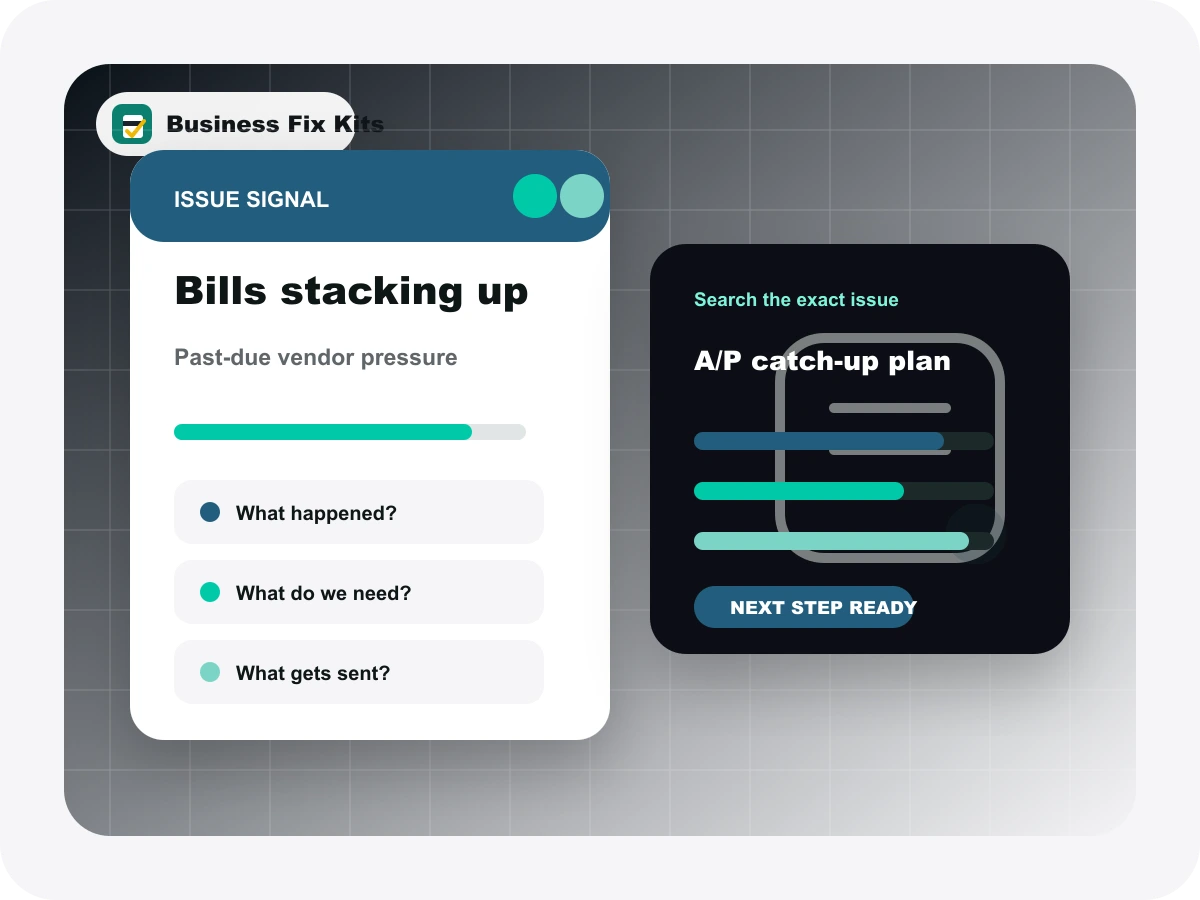
An AP aging report is not just accounting output. It is a map of where trust is thinning.
An accounts payable aging report should help a small business separate ordinary timing pressure from vendor relationships that could break soon. The useful question is not just how much is overdue. It is which supplier, landlord, freight partner, software vendor, or service provider creates the biggest operational damage if trust drops another notch.
Plenty of businesses open the aging, feel bad, and close it again. A stronger move is ranking the overdue balances by operational importance, upcoming commitments, and likelihood of hold or escalation.
What the AP aging should answer
How to rank overdue balances
| Vendor type | Why it matters | Priority signal |
|---|---|---|
| Revenue-critical supplier | Without them, production or order fulfillment slows. | High priority even if the balance is smaller. |
| Utility, rent, or infrastructure vendor | Loss creates direct operating disruption. | High priority because failure is expensive fast. |
| Replaceable service vendor | Late balance matters, but operational damage may be slower. | Important, but below mission-critical accounts. |
| Disputed invoice | The problem may be accuracy, not only cash timing. | Resolve the fact pattern before promising dates. |
Reactive payables versus controlled catch-up
Pay whoever shouts loudest this morning and hope the rest wait another week.
Use the aging to rank risk, decide the week-one cash move, and tell key vendors the catch-up plan before terms get tighter.
Get the free Emergency Triage Sheet
The first three moves for any business emergency, plus one practical fix in your inbox each week.
No spam. Unsubscribe anytime.
A vendor catch-up message that sounds credible
We reviewed our accounts payable aging and want to address invoice(s) [numbers] totaling [amount]. We can send [payment amount] by [date] and propose the remaining balance on [date or schedule]. Your account is important to our operations, and we want to confirm this plan with you directly before any hold or escalation affects open work.
Small business example
A fabrication shop sees three vendors over 60 days late. One supplies raw material for current jobs, one handles uniforms, and one provides a noncritical subscription. The wrong move is paying the loudest email first. The stronger move is protecting the material supplier, documenting the catch-up promise, and staging the rest around real cash capacity.
AP aging catch-up checklist
- Pull the current aging with 30, 60, and 90+ day buckets.
- Mark which vendors are mission-critical to revenue or operations.
- Separate disputed invoices from true overdue balances.
- Decide what can be paid now and what needs a staged catch-up promise.
- Track every vendor conversation so promises do not live only in email threads.
FAQ: should the oldest invoice always be paid first?
Not automatically. Age matters, but operational impact matters too. A smaller late balance with a revenue-critical supplier can deserve faster attention than an older balance with a vendor that will not disrupt current work.
Free version vs. full kit
This article is the free lightweight version: read the aging, rank vendor risk, and start catch-up calls. The full Accounts Payable Aging + Vendor Catch-Up Kit adds prioritization tools, vendor scripts, payment-plan trackers, and weekly review sheets so the backlog becomes manageable instead of emotional.
View the Accounts Payable Aging + Vendor Catch-Up Kit
Related article: A Vendor Credit Hold Needs a Release Plan Before It Becomes a Stockout.
Fix the next one before it starts.
Join the list for the free Emergency Triage Sheet and a new practical fix every week.
No spam. Unsubscribe anytime.